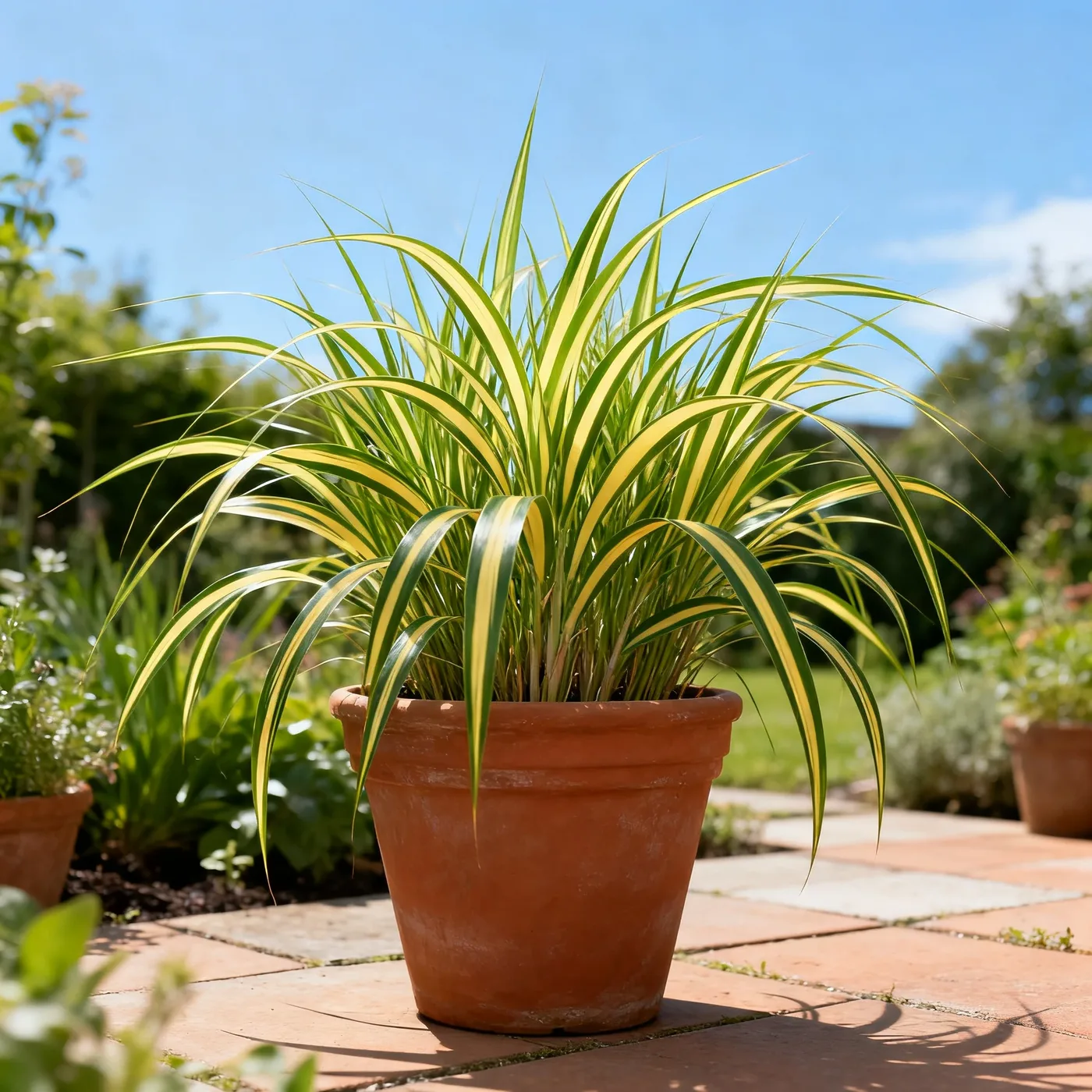
Dwarf Zebra Grass
Miscanthus sinensis 'Little Zebra'
Nursery-Grown Dwarf Zebra Grass, Ready to Plant
This size is not in the online store yet. Ask about availability and we will reply with current stock.
- Compact growth reaches 3-4 feet; perfect for borders, containers, and smaller landscapes
- Coppery-pink plumes mature to silver; foliage glows gold and bronze in autumn
- Deer-resistant and drought-tolerant once established; adapts to clay, sandy, or loamy soils
About this plant
Dwarf Zebra Grass is a warm-season ornamental grass prized for its compact size and distinctive striped foliage. It shines as a border accent, specimen focal point, or in large containers. Late summer brings coppery-pink plumes that mature to silvery-tan, and autumn foliage shifts to warm gold and bronze tones, extending seasonal interest through fall.
You'll receive a nursery-grown plant in its growing container, ready to transplant to garden or larger pot. Choose the size that fits your space and budget. Plant in full sun in well-drained soil within the first week if possible. Water thoroughly at planting and keep soil consistently moist but not waterlogged for the first season to establish roots.
Dwarf Zebra Grass at a glance
| Botanical name | Miscanthus sinensis 'Little Zebra' |
|---|---|
| Plant type | ornamental grass (warm-season, clump-forming herbaceous perennial) |
| USDA zones | 4-9 |
| Mature height | 3-4 ft in foliage; 4-5 ft including flower plumes |
| Mature width | 2-3 ft |
| Sun | full sun (6+ hours); tolerates light/part shade but growth becomes looser and banding/flowering is reduced |
| Water | average, medium moisture; drought tolerant once established, does not like standing water |
| Bloom time | late summer into fall (roughly August-October, varies by region) |
| Bloom color | coppery-pink to reddish plumes that mature to silvery-tan/white |
| Growth rate | moderate — reaches full mature size in about 2-3 growing seasons |
| Deer resistance | good/high |
| Best planting time | spring after last frost is best; early fall planting is also workable in milder zones |
Container sizes explained
| Quart / QT | A 4 inch pot, roughly one quart of soil. A young starter plant, the most economical way to buy several. |
|---|---|
| #1 / 1 Gallon | A trade one gallon pot (about 6.5 inches). One to two seasons older than a quart, with an established root system. |
| #3 / 3 Gallon | A trade three gallon pot (about 10 inches). A well-developed shrub or small tree, often 2 to 4 feet tall on arrival. |
Questions before you buy
Which size should I choose?
The Quart is best for containers or to fill gaps in established beds. The #1 offers a balance of size and price for most garden settings. The #3 is the largest and will fill space faster, ideal if you want a more mature-looking plant at arrival.
When should I plant after arrival?
Plant within the first week of arrival for best results. If you can't plant immediately, keep the container watered and in a location with good light. Spring and early summer are the ideal windows for planting in most zones; avoid planting in late fall in colder zones.
How tall and wide does Dwarf Zebra Grass get?
Foliage reaches 3-4 feet tall with flower plumes extending to 4-5 feet in mature plants. It spreads 2-3 feet wide at maturity. It's a moderate grower, reaching full size in about 2-3 growing seasons.
How much sun does it need?
Dwarf Zebra Grass performs best in full sun, at least 6 hours daily. It tolerates light to part shade but will grow looser and produce fewer flowers and less vibrant striping. Full sun also brings out the best foliage color and plume formation.
What hardiness zones is this grass suitable for?
Dwarf Zebra Grass is hardy in USDA zones 4-9, making it suitable for most of the continental US. Verify your zone at planting time. In zone 4, plant in spring to give roots time to establish before winter.
What care does it need in the first year?
Keep soil consistently moist, not waterlogged, through the first growing season. Water deeply after planting and weekly if rain is scarce. It's drought-tolerant once established, but young plants benefit from regular moisture.