Sun and Light Needs for Dwarf Zebra Grass Explained
Dwarf Zebra Grass is a sun-loving ornamental grass, and getting the light right is the difference between a plant that dazzles and one that merely survives. This guide walks you through assessing your site, positioning your plant, and understanding what happens when light levels don't match the grass's preferences.
Why Sunlight Matters for Dwarf Zebra Grass
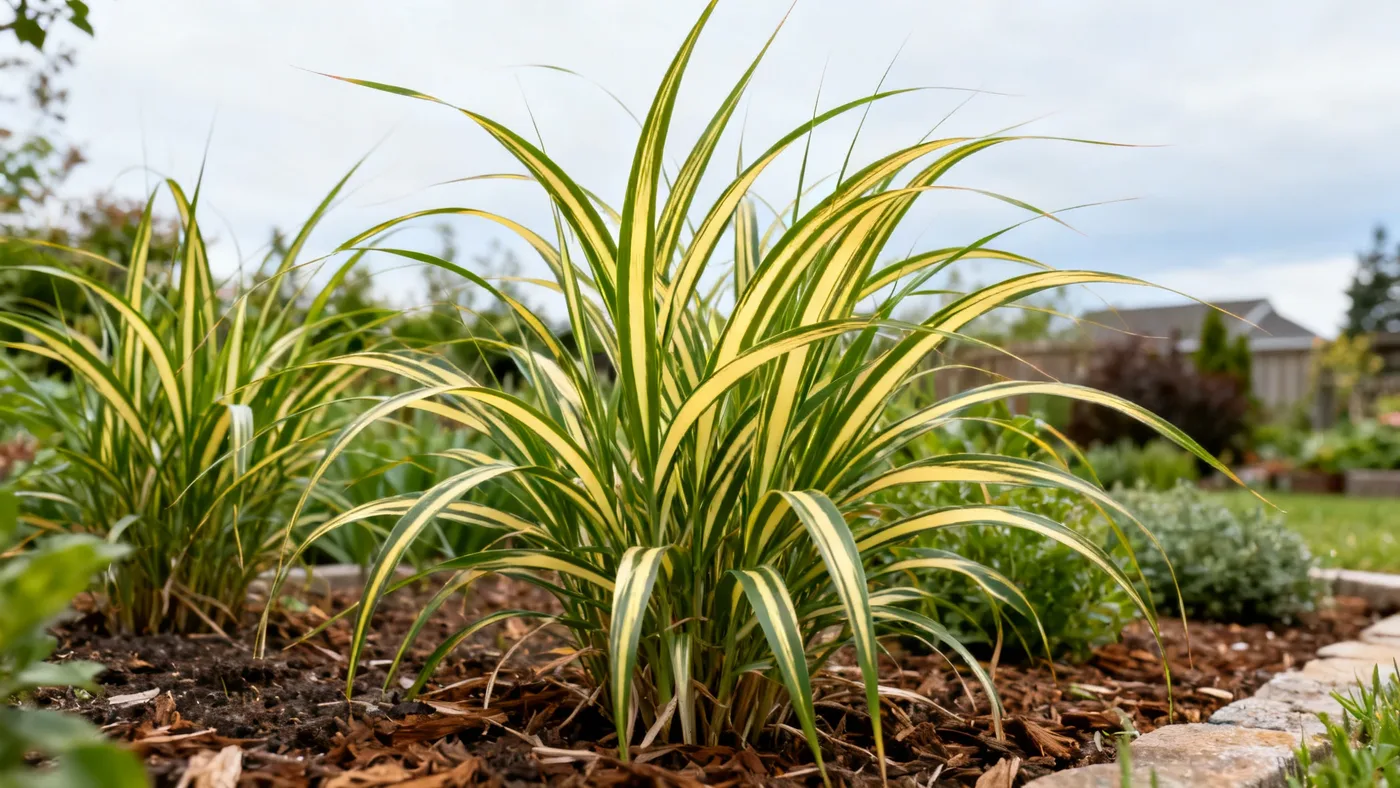
The distinctive horizontal yellow and cream bands that give this grass its "zebra" nickname are most vivid in strong light. Sunlight also drives the plant to flower reliably and keeps the foliage upright and compact. Without enough light, the variegation fades, the clump becomes loose and floppy, and flowering may be sparse or delayed. The difference between a plant in full sun and one in part shade is visible within a single growing season.
This warm-season grass needs that solar energy to reach its full ornamental potential. The more light it receives, the more the plant invests in those striking bands and the tall, coppery-pink plumes that mature to silvery-tan in fall.
Full Sun Requirements: What 6+ Hours Really Means
Dwarf Zebra Grass thrives in full sun, which the nursery industry defines as 6 or more hours of direct sunlight per day. This is direct sun, not filtered light through tree canopy or reflected light off a wall. The grass counts peak daylight hours: morning and afternoon sun are equally valuable, though afternoon sun in very hot, dry climates may stress young plants during establishment.
If your site receives 6 to 8 hours of unobstructed sun, you have ideal conditions. Eight hours or more is even better for the most vibrant banding and fullest flowering. The more sun, the more impressive the plant's autumn show.
Dwarf Zebra Grass does tolerate light or part shade (roughly 3 to 6 hours of direct sun daily), but with tradeoffs. In partial shade, growth becomes looser, the variegation appears less bold, and flower plumes are fewer and smaller. Some gardeners plant this grass in part shade anyway, accepting a more relaxed, informal look. What the plant will not tolerate is deep or full shade (less than 3 hours of direct sun). In shade, it will struggle to establish and may never flower.
How to Assess Your Site for Sunlight
Before you plant, spend a few days observing your chosen location. This step takes almost no time and prevents regret later.
Step 1: Track sun exposure for a full day. Choose a typical day in the season when you plan to plant (spring or early fall). Walk to your site in the morning when the sun is low, note which areas are in shadow, and return each hour to watch shade patterns shift. By late afternoon, you will have a clear sense of when sun hits the spot.
Step 2: Count the peak daylight hours. Mark the times when direct sun reaches the planting area. The grass needs a minimum of 6 continuous or near-continuous hours. If you see the sun arriving at 9 a.m. and leaving by 3 p.m., that is roughly 6 hours and acceptable. If the sun reaches the site only from 4 p.m. to sunset, that is not enough.
Step 3: Account for seasonal change. The sun is lower in the sky in fall and winter, so shadows deepen. If your site is near a tree or building, check that it is not shaded during the growing season (spring and early summer). A site that gets 6 hours in May may get only 4 hours by October. Choose conservatively: aim for at least 6 hours even at the season when the sun is lowest.
Step 4: Note reflected heat sources. Dwarf Zebra Grass tolerates heat well once established. If your site is next to south-facing pavement or a light-colored wall that reflects intense afternoon heat, the plant can handle it. However, very young plants (first few weeks after planting) benefit from afternoon shade in hot regions, so plan any part-shade placement for that early establishment period if your climate is hot and dry.
Positioning Your Plant for Maximum Light
Once you have identified a sunny spot, placement within that area matters for the plant's structure and your garden's design.
Step 1: Place the plant away from competing shade. Set Dwarf Zebra Grass at least 3 to 4 feet away from the base of trees, tall shrubs, or walls on its north side (in the northern hemisphere). This distance prevents shade from slowly creeping across the grass as the tree grows or as surrounding plants mature. The grass reaches a mature width of 2 to 3 feet, so leaving 3 to 4 feet of clear space ensures unobstructed light even when the clump is fully grown.
Step 2: Position it as a specimen or focal point. Because the banding and flowers are so striking in full sun, place the grass where you or visitors will see it: near an entryway, at the back of a planting bed, or in a rock garden where it will not be shaded by other plantings. The more visible the plant, the more you will appreciate those bands and plumes.
Step 3: Space companion plants accordingly. Dwarf Zebra Grass pairs beautifully with other sun-lovers like black-eyed Susan (Rudbeckia), coneflower (Echinacea), Russian sage (Perovskia), and sedums. Plant these companions far enough away (at least 24 to 36 inches apart, as recommended for spacing the grass itself) so that as they mature, they do not throw shade on the grass. Taller companions should go on the north or west side of the grass, not to the south or east.
Step 4: Avoid high-shade combinations. Do not pair Dwarf Zebra Grass with tall perennials that will later shade it, and avoid planting it under the dappled shade of deciduous trees. A site that is sunny today may become shaded as the garden grows.
Understanding Shade Tolerance and Trade-offs
Some gardeners have only part-shade sites and still wish to grow Dwarf Zebra Grass. It is possible, but results will differ from a full-sun specimen.
In partial shade (3 to 6 hours of direct sun), the plant will grow, but the clump tends to be looser and more open. The stems lean toward the light rather than standing rigidly upright. The yellow and cream variegation remains visible but is less saturated, appearing more pale or washed-out than in full sun. The plant may flower in its second or third season but produce fewer plumes, and the color show is less dramatic.
Some gardeners actually prefer this softer look. A part-shade planting can work well in a woodland edge garden or in a spot where you want the texture of the grass without the bold structure of a full-sun specimen.
However, avoid deep shade entirely. If the site receives fewer than 3 hours of direct sun, the grass will struggle from the start: growth will be slow and weak, variegation will barely show, and flowering may not happen at all.
Seasonal Sun Changes and Long-Term Positioning
The sun's path shifts between seasons. In the summer solstice, the sun is high and shadows are short. By fall and winter, the sun is lower, and shadows lengthen. Plan your planting site with this in mind.
If you are planting in spring, your 6-hour site will remain well-lit through the main growing season (spring, early summer, and midsummer when the grass is building vigor). By late fall, when the plant is dormant and standing as dried foliage, reduced light is not a problem because growth has stopped. Winter shade is irrelevant to the plant's performance.
If you are planting in early fall, verify that the site still gets at least 5 to 6 hours of direct sun even as the sun moves lower. The grass will have a shorter window to establish roots before dormancy, and cloudy fall weather means less total light. A site that seems sunny in September may drop below your light threshold by late October, so choose conservatively if planting late in the season.
Troubleshooting Poor Light Situations
If your Dwarf Zebra Grass is growing in your garden and the foliage looks loose, pale, or floppy, insufficient light is often the culprit (though over-rich soil and overcrowding also cause lodging).
Assess the light first. Re-count the hours of direct sun reaching the plant. If it is receiving fewer than 6 hours, that is your answer. Part shade is not a failure, but it is a known trade-off: expect less vibrant color and a more relaxed habit.
Consider relocating if possible. If the plant is young (in its first or second year), it may be worth digging and replanting to a sunnier spot in early spring. Established clumps (3+ years old) are large and have deep roots, making relocation harder but not impossible. Spring is the best time to attempt this.
Prune nearby trees or shrubs. If shade is coming from a nearby tree, selective pruning to allow more light through the canopy can help. Remove lower branches or thin the canopy to let morning sun reach the grass. This approach takes time but may rescue a plant that is borderline on light.
Accept part-shade performance. Many gardeners simply accept that their Dwarf Zebra Grass will be a part-shade plant and enjoy its softer, more informal appearance. Reduced banding and fewer flowers do not mean the plant is failing; it is simply expressing itself differently in that light regime.
Quick Reference: Sun and Light Checklist
| Light Condition | Direct Sun Hours | Plant Performance | Best For |
|---|---|---|---|
| Full sun (ideal) | 6+ hours/day | Vibrant gold and cream banding, upright compact clump, abundant coppery-pink flowers in late summer | Specimen plantings, focal points, maximum visual impact |
| Light or part shade | 3-6 hours/day | Visible but pale variegation, loose open habit, fewer and smaller flowers, flowering may be delayed | Woodland edges, informal gardens, sites where softer look is preferred |
| Deep shade (not recommended) | Less than 3 hours/day | Slow growth, minimal variegation, little to no flowering, potential decline over 2-3 years | Not suitable; plant will struggle |
Before You Plant
- Track direct sun at your site for at least one full day in the planting season
- Aim for a minimum of 6 hours of unobstructed direct sunlight
- Account for seasonal sun changes; verify the site remains sunny even when the sun is low
- Note any trees or structures that may cast increasing shade as years pass
- Position the plant away from tall companions on its south and east sides
At Planting Time
- Space Dwarf Zebra Grass 24 to 36 inches from neighboring plants to keep it open to light
- Position it in a focal location where the banding and flowers will be appreciated
- Avoid planting under deciduous trees or in sites that will gradually fill with shade
- In very hot regions, young plants may benefit from afternoon shade in the first few weeks of establishment
After Planting
- Observe the plant's growth habit over the first growing season; looser growth signals insufficient light
- The plant reaches full mature size in about 2 to 3 growing seasons, allowing ample time to observe light performance
- If variegation is pale or flowering is sparse by mid-summer of year two, consider that your site may be part-shade
- For more guidance on overall care, see the complete Dwarf Zebra Grass care guide for every season