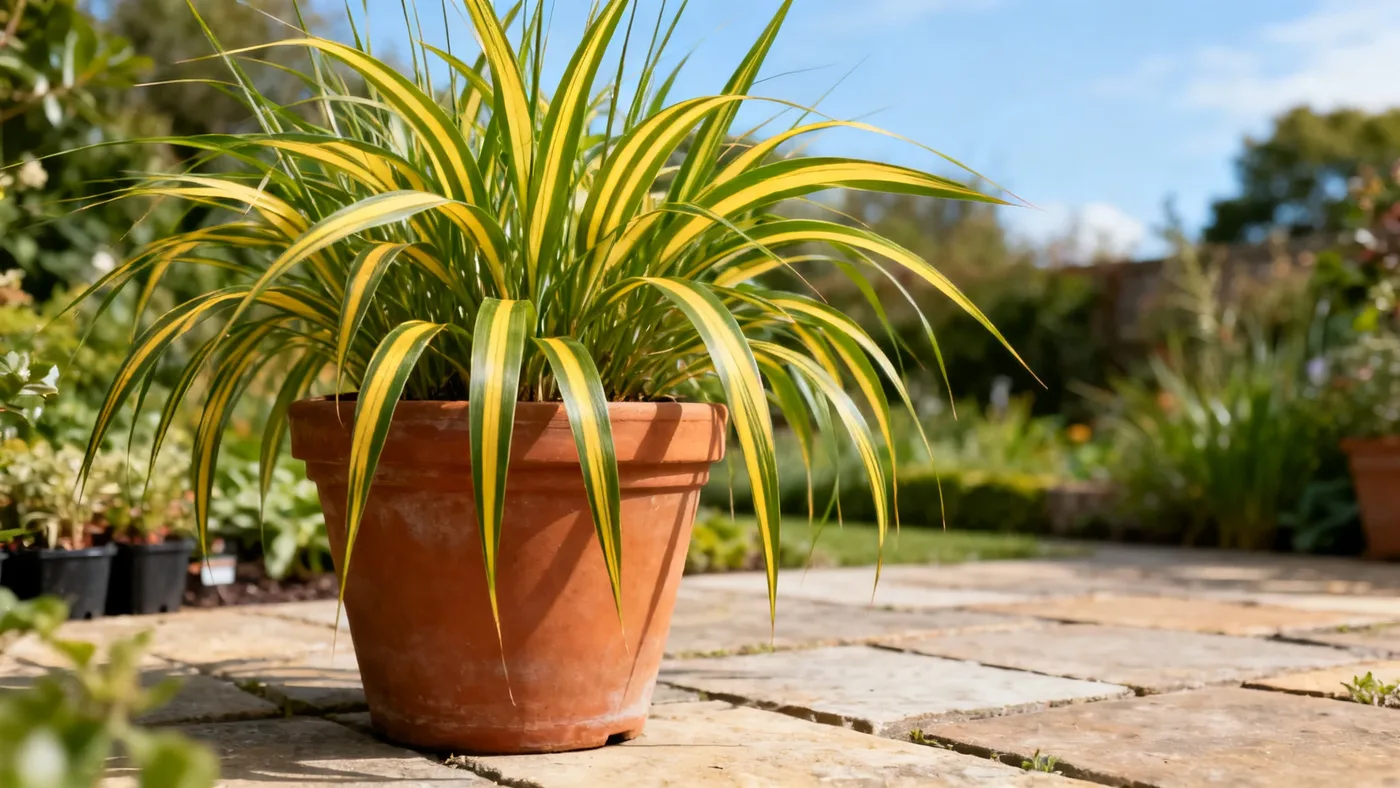
Growing Dwarf Zebra Grass in Containers and Pots
Dwarf Zebra Grass (Miscanthus sinensis 'Little Zebra') is one of the best ornamental grasses for container growing. Its compact size, reaching 3 to 4 feet in foliage height and 2 to 3 feet wide at maturity, makes it practical for patios, decks, and small garden spaces where standard-size grasses would overwhelm the planting area. This guide walks you through choosing the right container, planting, and maintaining your Dwarf Zebra Grass for year-round interest.
Why Containers Work for Dwarf Zebra Grass
Dwarf Zebra Grass thrives in containers for several practical reasons. The plant's moderate growth rate reaches full mature size in about 2 to 3 growing seasons, giving you visible results without waiting years. Its tidy footprint, never exceeding 2 to 3 feet in width, fits neatly into defined spaces. Because this cultivar tolerates average to medium moisture and is drought tolerant once established, it doesn't demand the constant watering that other container plants require. The distinctive horizontal creamy-yellow bands on the green blades are just as striking in a pot as in the ground, and the coppery-pink to silvery plumes that appear in late summer into fall add late-season color without spilling onto walkways.
Materials and Container Setup
Success starts with the right container. Choose a pot at least 18 to 20 inches in diameter for a single mature plant, and ideally 24 inches or larger if you want room for the grass to develop fully without becoming root-bound. Dwarf Zebra Grass can be grown in #3 containers or larger, similar to the size of nursery-grown plants you'd purchase. Terracotta, plastic, and fabric pots all work, but ensure whatever you choose has drainage holes. A pot without drainage will trap moisture and encourage root rot.
For soil, use a well-draining potting mix formulated for ornamental grasses or perennials. Dwarf Zebra Grass adapts to most soils and prefers moist, well-drained conditions. A mix of 60 percent potting soil, 20 percent perlite or pumice, and 20 percent compost works well. The grass is adaptable to soil pH roughly between 5.5 and 7.5, so standard garden center potting mixes are fine. Avoid heavy clay-based mixes that retain too much water and can lead to root issues.
You'll also need:
- A single Dwarf Zebra Grass plant from a nursery (spring after last frost is the best planting time, though early fall works in milder zones)
- Potting soil as described above
- A container with drainage holes, 18 to 20 inches or larger in diameter
- Watering can or hose
- Optional: balanced fertilizer with moderate strength (the grass is a light feeder)
Step-by-Step Planting Instructions
Step 1: Prepare the Container
Fill the bottom third of your pot with the potting mix. If you're using a very large container, you can layer it with some coarser material (broken pottery or pebbles) at the very bottom to improve drainage, then add your soil mix on top. The goal is to create a base that allows water to drain freely while supporting the plant.
Step 2: Remove the Plant from Its Nursery Pot
Gently remove your Dwarf Zebra Grass from its nursery pot. If the roots are tightly wound, loosen them with your fingers. This helps the roots spread into the surrounding container soil rather than continuing to circle. If the plant is very root-bound, you can make a few vertical cuts along the sides of the root ball.
Step 3: Set the Plant in the Container
Place the grass into the center of the pot. The top of the root ball should sit just below the rim of the container. This allows room for water to accumulate without running off. Add soil around the sides, pressing gently to eliminate air pockets. The plant should be at the same depth as it was in its nursery pot, never buried deeper.
Step 4: Water Thoroughly
Water the newly planted container until water drains from the bottom. This settles the soil and ensures the roots make contact with the surrounding mix. In the first few weeks, keep the soil consistently moist but not waterlogged while the plant establishes.
Step 5: Choose a Location
Place your container in full sun, which means 6 or more hours of direct sunlight daily. Dwarf Zebra Grass tolerates light or part shade, but growth becomes looser and the distinctive banding and flowering are reduced in less light. A sunny patio or south-facing balcony is ideal.
Container Care Through the Season
Spring and Early Summer
In spring, when new growth appears, water when the top inch of soil feels dry. Dwarf Zebra Grass is drought tolerant once established, but container plants dry out faster than in-ground plantings. A balanced, moderate fertilizer application in spring is optional, this grass is a light feeder and doesn't need heavy feeding. If you do fertilize, use a diluted application to avoid encouraging floppy, weak growth.
Summer
Monitor moisture regularly as heat increases. During hot spells, your container may need water more frequently. Stick your finger into the soil; if it's dry 2 inches down, water thoroughly. Consistent moisture supports better foliage color and stronger growth. In hot climates, moving the container into afternoon shade during extreme heat waves can prevent the soil from becoming too hot and drying too quickly.
Late Summer and Fall
By late summer into fall, roughly August through October depending on your region, your Dwarf Zebra Grass will send up flower plumes. These start coppery-pink and mature to silvery-tan and white, creating striking contrast against the striped foliage. Continue watering as needed, but reduce fertilizer. The plant is naturally preparing for dormancy, and excessive nutrients at this stage won't help.
Overwintering Your Container Grass
Dwarf Zebra Grass grows in USDA zones 4 through 9. If you live in zones 4 through 6, your container may require winter protection. The roots in a pot are more exposed to freezing than in-ground plantings. In cold zones, move the pot to a sheltered location such as against a south-facing wall or into an unheated garage. You can also wrap the container with burlap or frost cloth to insulate the soil. In zones 7 through 9, the container can stay outdoors year-round.
Winter interest is one of the grass's strengths. The dried tan foliage and seed plumes persist and look attractive through winter, so many gardeners leave them standing until late winter or very early spring. In late winter or very early spring before new growth emerges, cut all foliage back to 4 to 6 inches above the ground. Remove the old growth from the pot, refresh the top layer of soil with fresh potting mix if desired, and wait for new growth to appear as temperatures warm.
Common Mistakes to Avoid
Using a Container Without Drainage
This is the most common mistake. Poor drainage leads to waterlogged soil, which causes root rot and fungal issues. Always use a pot with drainage holes.
Overcrowding Multiple Plants
Even though Dwarf Zebra Grass is compact, planting two or more plants in one container leads to overcrowding and competition. A single mature plant reaches 2 to 3 feet wide and needs its own space to develop properly. If you want a fuller look quickly, use a larger container, but stick with one plant.
Overfertilizing
This grass is a light feeder. Too much fertilizer, especially high-nitrogen blends, causes soft, floppy growth that may flop over from its own weight or a light breeze. Less is more with Dwarf Zebra Grass.
Neglecting Watering in Summer Heat
While the grass is drought tolerant once established in the ground, container plants dry out much faster. Monitor soil moisture regularly during hot weather, especially in smaller pots.
Skipping the Late-Winter Pruning
Old foliage can trap moisture against new growth in spring, encouraging disease. Cutting back to 4 to 6 inches above the ground in late winter or very early spring removes this risk and promotes clean, vigorous new growth.
What to Expect
In its first or second year, your Dwarf Zebra Grass may produce flower plumes, though the clump may not yet reach full size. By year two to three, the plant reaches its mature height of 3 to 4 feet in foliage and 4 to 5 feet including plumes, with a spread of 2 to 3 feet. The characteristic horizontal gold or creamy-yellow bands on the green blades become more pronounced as the plant matures. Fall foliage shifts to tan, gold, and bronze tones, extending seasonal interest well into winter. The coppery-pink plumes maturing to silvery-white provide late-summer and fall color without frequent deadheading.
Container-grown plants may not spread quite as wide as in-ground specimens due to root constraints, but this is actually desirable in a pot. The grass typically lives well over 10 years as a long-lived perennial. Every 3 to 5 years, you may want to divide the clump if it starts to decline in vigor, though container plants often maintain vigor longer than in-ground plantings that run out of space.
Quick Reference: Container Care Checklist
| Task | Timing | Details |
|---|---|---|
| Choose container | Before planting | 18–20 inches or larger in diameter, with drainage holes |
| Plant | Spring after last frost or early fall | Use well-draining potting mix; plant at same depth as nursery pot |
| Select location | At planting | Full sun (6+ hours daily) |
| Water establishment period | First few weeks after planting | Keep soil consistently moist, not waterlogged |
| Ongoing watering | Growing season | Water when top 1–2 inches of soil are dry; more frequently in summer |
| Optional fertilizing | Spring | Balanced, moderate-strength fertilizer; light feeder, avoid over-feeding |
| Winter protection | Fall to spring (zones 4–6 only) | Move to sheltered location or wrap container in frost cloth |
| Pruning | Late winter or very early spring | Cut all foliage back to 4–6 inches above the ground; remove old growth from pot |
| Expected bloom | Late summer into fall (August–October) | Coppery-pink plumes mature to silvery-white; may appear in year 1 or 2 |
| Full mature size | About 2–3 years from planting | 3–4 feet tall in foliage, 4–5 feet with plumes; 2–3 feet wide |
For deeper seasonal guidance on all aspects of Dwarf Zebra Grass care, see the complete care guide for every season.