How Big Does Dwarf Zebra Grass Get and How Fast Does It Grow?
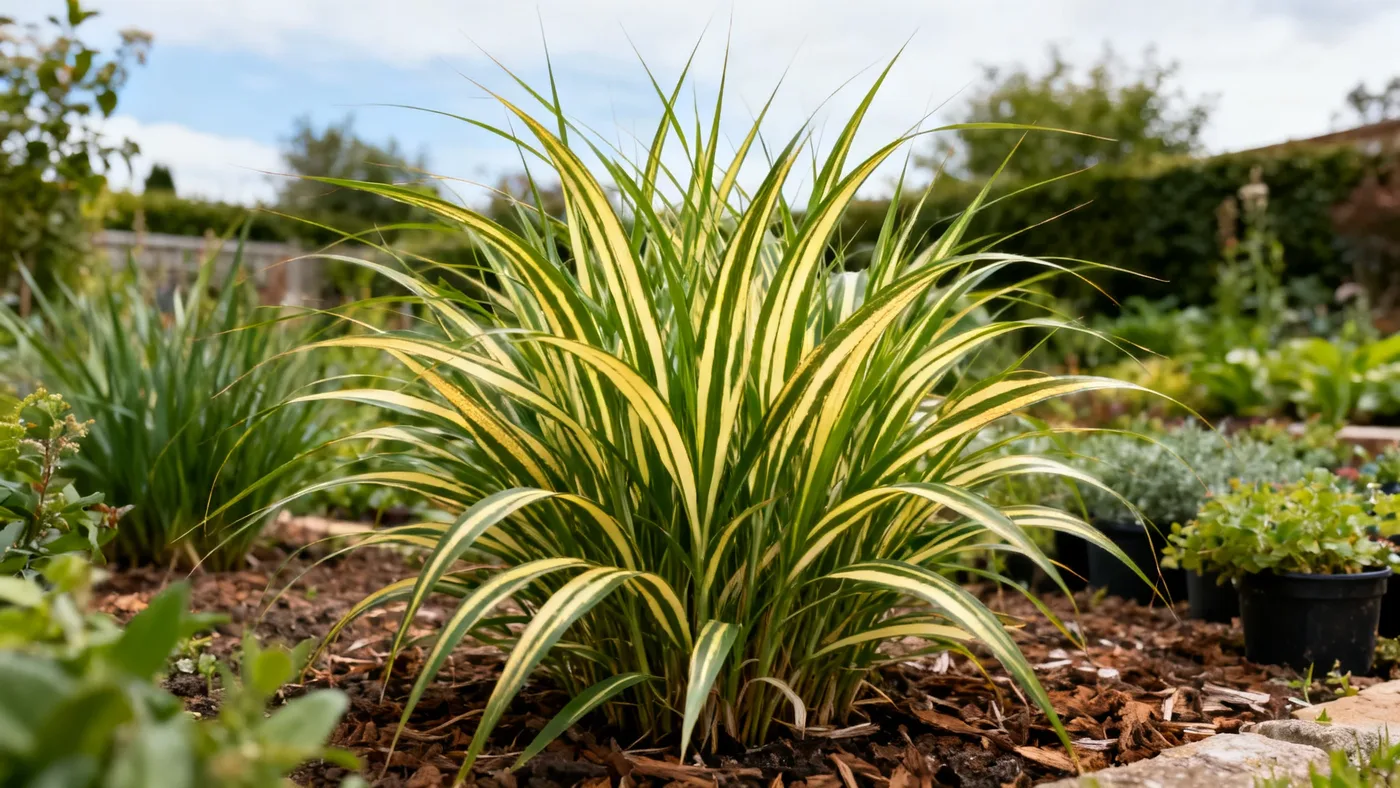
Dwarf Zebra Grass is one of the smallest cultivars in the Miscanthus family, which makes it perfect for smaller gardens and containers. Understanding exactly how big this ornamental grass gets and how quickly it reaches its mature size helps you plan your landscape and set realistic expectations from year to year. This guide answers the questions we hear most often from gardeners who are sizing and spacing their plantings.
Basic Size and Dimensions
What is the mature height of Dwarf Zebra Grass?
Dwarf Zebra Grass reaches 3 to 4 feet in foliage height. If you include the flowering plumes that emerge in late summer, the total height extends to 4 to 5 feet. Most of the year you see the shorter measurement, but during bloom time the flower spikes add extra vertical interest to your landscape. The exact height varies slightly based on your growing conditions, with plants in full sun and ideal soil tending toward the upper end of that range.
How wide does a mature Dwarf Zebra Grass clump grow?
A mature clump spreads 2 to 3 feet wide. This width is narrow enough to work in most borders and tight spaces, yet substantial enough to make a real visual impact as a focal point or massed planting. The arching, fountain-like habit means the plant spreads outward more than it pushes upward, so account for that 2-to-3-foot spread when spacing multiple plants.
Is Dwarf Zebra Grass truly "dwarf" compared to other zebra grass types?
Yes. The standard full-size zebra grass cultivar (Miscanthus sinensis 'Zebrinus') reaches 5 to 7 feet tall, making our Dwarf Zebra Grass significantly more compact. At 3 to 4 feet in foliage, this cultivar fits into smaller gardens and containers where the larger type would overwhelm the space. If you are comparing sizes for border depth or container choices, the "dwarf" designation is meaningful and accurate.
Growth Rate and Timeline to Maturity
How fast does Dwarf Zebra Grass grow?
Dwarf Zebra Grass has a moderate growth rate and reaches its full mature size in approximately 2 to 3 growing seasons. You will notice steady expansion each summer, with the clump roughly doubling in size by the end of the second year. Most gardeners see a substantial, landscape-ready plant by the end of year two or early year three.
Will my Dwarf Zebra Grass be full-size in its first year?
No. Your first-year plant will be noticeably smaller than a 2-or-3-year-old clump. Young plants typically grow 12 to 18 inches taller each growing season, so expect a 1-year-old plant to be 50 percent of mature height at best. The good news is that it will look decent and fill space; it simply has not reached its full potential yet.
When does Dwarf Zebra Grass bloom and does that affect its size?
Flowering begins in late summer, typically from August through October, depending on your region. The plant often blooms in its first or second year, which does not stunt its growth but instead indicates vigor. The coppery-pink flower plumes mature to silvery-tan and can extend your visual height by 1 to 2 feet without affecting the foliage clump size underneath.
How much does height increase each year?
During the growing season, expect 12 to 18 inches of new growth per year, measured from the ground level up to the tip of the tallest blade. This means a newly planted 1-gallon nursery plant might reach 2 to 3 feet by the end of its first season, and then add another 12 to 18 inches in year two. Growth slows slightly by year three once the plant approaches full maturity.
First Year Growth and Establishment
Why does my Dwarf Zebra Grass look small or dormant in spring?
Dwarf Zebra Grass is slow to emerge in spring compared to many other perennials, which is a known trait of this cultivar. The root system is active underground long before visible foliage appears, so do not assume your plant is dead if it looks lifeless in April or May. Once soil temperatures climb and the plant senses enough daylight, new growth emerges rapidly, often adding 6 to 12 inches in a matter of weeks.
When should I expect substantial growth after planting?
Spring planting, after your last frost date, is the best time for strong first-year growth. If you plant in spring, growth accelerates through late spring and summer, giving you a recognizable plant by fall. Early fall planting (in milder zones 7-9) is also workable, but the plant has less time to establish before winter dormancy, so first-year size may be more modest.
Does a newly planted Dwarf Zebra Grass need extra care to reach mature size faster?
No special acceleration tricks are needed. Consistent moisture during the growing season (spring through early fall) and full sun support healthy growth at the plant's natural moderate pace. Avoid over-fertilizing, which can actually cause the foliage to flop and look less attractive without speeding up your journey to mature size.
Container and Landscape Sizing
What size container does Dwarf Zebra Grass need?
Dwarf Zebra Grass is well-suited to large containers given its compact size relative to standard zebra grass. Start with a pot at least 18 to 24 inches in diameter and 18 to 20 inches deep. A mature plant can live and thrive in this size long-term, though it benefits from division every 3 to 5 years if you want to keep the clump from becoming too dense.
How much space should I leave between plants in a border?
Space individual plants 24 to 36 inches apart. The narrower spacing (24 inches) creates a fuller look sooner and works well for borders where you want plants to touch at maturity. The wider spacing (36 inches) is ideal if you want more breathing room or are working with a limited budget and do not mind a slower fill-in period.
Can I use Dwarf Zebra Grass in mass plantings?
Yes, absolutely. The moderate growth rate and consistent 3-to-4-foot height make it excellent for massed plantings, especially in larger landscapes. By year three, a mass planting will look established and impactful. Use 24-inch spacing if you want them to knit together quickly, or 30 to 36 inches if you prefer a more sculptural, spaced-apart effect.
How does Dwarf Zebra Grass compare in size to other ornamental grasses?
Most other Miscanthus cultivars are taller (5 to 7 feet). Smaller grasses like blue fescue or feather reed grass are actually taller than Dwarf Zebra Grass, but their foliage is much finer and more delicate. Dwarf Zebra Grass sits in the mid-height range, making it a perfect bridge between ground covers and large specimen grasses.
Growth Factors and Conditions
Does sun exposure affect how big Dwarf Zebra Grass gets?
Yes. Full sun (6 or more hours daily) supports the most robust growth and the most distinctive banding and flowering. In partial shade or light shade, the plant still grows but does so more loosely and may not reach the upper end of the 3-to-4-foot range. The horizontal yellow bands on the foliage also become less pronounced in shade.
Can poor soil or drought slow down Dwarf Zebra Grass growth?
Dwarf Zebra Grass is adaptable to most soils and is drought-tolerant once established. During the first year or two after planting, consistent moisture during the growing season accelerates growth. Once the root system is deep and mature (by year two or three), the plant tolerates dry spells without losing momentum.
Should I fertilize to make Dwarf Zebra Grass grow bigger?
Dwarf Zebra Grass is a light feeder, and over-fertilizing can do more harm than good. A single balanced fertilizer application in spring is optional and usually sufficient. Heavy fertilization promotes lush foliage growth but often leads to flopping or lodging, especially if the plant is also in too much shade.
What soil type works best for consistent growth?
The plant is adaptable to most soils including clay. It prefers moist, well-drained conditions and has a soil pH range of roughly 5.5 to 7.5. Avoid standing water, which can cause root rot and stunt growth. Sandy, rocky, or compacted soils are workable but benefit from organic matter worked in at planting time.
Seasonal Changes and Winter Appearance
Does Dwarf Zebra Grass shrink or disappear in winter?
Yes, it is deciduous. Above-ground foliage dies back with frost and should be cut back to 4 to 6 inches above ground in late winter or very early spring, before new growth emerges. Once cut back, the clump remains dormant underground throughout winter. Do not worry about the stumpy appearance; this is normal and healthy.
When should I cut back Dwarf Zebra Grass?
Cut back in late winter or very early spring, ideally as soon as you see new growth starting to emerge but before the young shoots reach 4 to 6 inches tall. This timing avoids damaging tender new growth while clearing away the old dried foliage. The exact timing depends on your zone; zones 4-5 might do this in March, while zones 8-9 might do it in February.
Does the winter dormancy make the plant look smaller?
The dormant plant is indeed much less visually prominent. For winter interest, many gardeners leave the dried tan foliage and seed plumes standing; they are attractive and provide winter cover for wildlife. If left standing, the plant looks substantial through most of winter before being cut back in early spring.
How long does it take for new growth to fill in after spring pruning?
New foliage emerges in 2 to 4 weeks after the last frost in your zone, depending on soil temperature. By late spring or early summer, the plant looks full and lush again. The full height of 3 to 4 feet is usually reached by mid-to-late summer, providing abundant screening or structure for the rest of the season.
Growth Expectations by Year
What should I expect in year one after planting?
A nursery-grown plant (usually sold in a quart or #1 container) planted in spring will reach 18 to 30 inches tall by the end of summer. The plant is establishing roots and preparing for stronger growth ahead. Do not expect a full-sized specimen yet, but you will see clear, steady progress through the growing season.
What about year two of growth?
Year two is when real transformation happens. Your plant should reach 3 to 4 feet tall and spread to 2 to 3 feet wide by mid-to-late summer. Flowering is common by year two, and the clump looks substantial and landscape-ready. This is the year when spacing decisions become clear; crowded plantings start to touch.
Is year three when the plant stops growing?
Not quite. The plant reaches its full mature size by the end of year two or early year three, and then growth essentially plateaus. The clump maintains this size year to year, though it can become denser and woodier over time. After 3 to 5 years, division rejuvenates vigor and prevents the center from becoming too thick or sparse.
Zone-Specific Growth Notes
Does Dwarf Zebra Grass grow faster in warmer zones?
Yes, slightly. The plant is hardy in zones 4 through 9, and warmer zones have a longer growing season, so spring emergence comes earlier and fall dormancy arrives later. A zone 4 gardener might see the plant hit full size by late summer of year three, while a zone 8 gardener might achieve it sooner. The difference is typically a matter of a few weeks, not a fundamental change in the timeline.
Will Dwarf Zebra Grass survive winter in my zone?
The plant is hardy in USDA zones 4 through 9, so if your zone falls within this range, winter survival is reliable. A thick mulch layer over the root zone helps in zone 4, though it is not strictly necessary. Zones 10 and above are too warm for this cultivar; the plant struggles with year-round heat.
Long-Term Size and Division
Does Dwarf Zebra Grass keep growing larger after it reaches maturity?
No, the mature size of 3 to 4 feet tall and 2 to 3 feet wide is the ceiling. After year three, the clump stays roughly this size year to year. However, the clump can become denser and more woody over time as older stems accumulate. Division every 3 to 5 years keeps the plant vigorous and prevents the center from deteriorating.
What happens if I never divide my Dwarf Zebra Grass?
Left undivided, the clump maintains its size but eventually becomes too dense in the middle, and the outer edges may start to look thin or sparse. Division restores a youthful, vigorous appearance and gives you extra plants for your garden or to share with neighbors. If appearance is not a concern, the plant survives undivided for well over 10 years.
How do I divide Dwarf Zebra Grass without harming it?
Division is best done in early spring as new growth emerges. Dig up the clump, rinse away soil, and cut it into sections using a sharp spade or large knife, ensuring each piece has several growing points. Replant the divisions immediately at the same depth, water well, and they will establish quickly. You can plant the divisions at the standard 24-to-36-inch spacing and have a larger display in just a few years.
Quick Reference Table
| Measurement | Value |
|---|---|
| Mature Height (foliage) | 3-4 feet |
| Mature Height (with flower plumes) | 4-5 feet |
| Mature Width | 2-3 feet |
| Growth Rate | Moderate (12-18 inches per year) |
| Years to Mature Size | 2-3 growing seasons |
| First-Year Bloom | Often blooms year 1 or year 2 |
| Recommended Spacing | 24-36 inches apart |
| Minimum Container Size | 18-24 inches diameter, 18-20 inches deep |
| Hardy Zones | 4-9 |
| Bloom Season | August-October |
| Cut-Back Height (spring pruning) | 4-6 inches above ground |
| Lifespan | 10+ years (benefits from division every 3-5 years) |
Getting More Help
For detailed care steps through every season, see our complete care guide for Dwarf Zebra Grass. That resource walks through planting, watering, fertilizing, pruning, and troubleshooting with the same practical detail you will find here.