Dwarf Zebra Grass vs Zebra Grass: What Is the Difference?
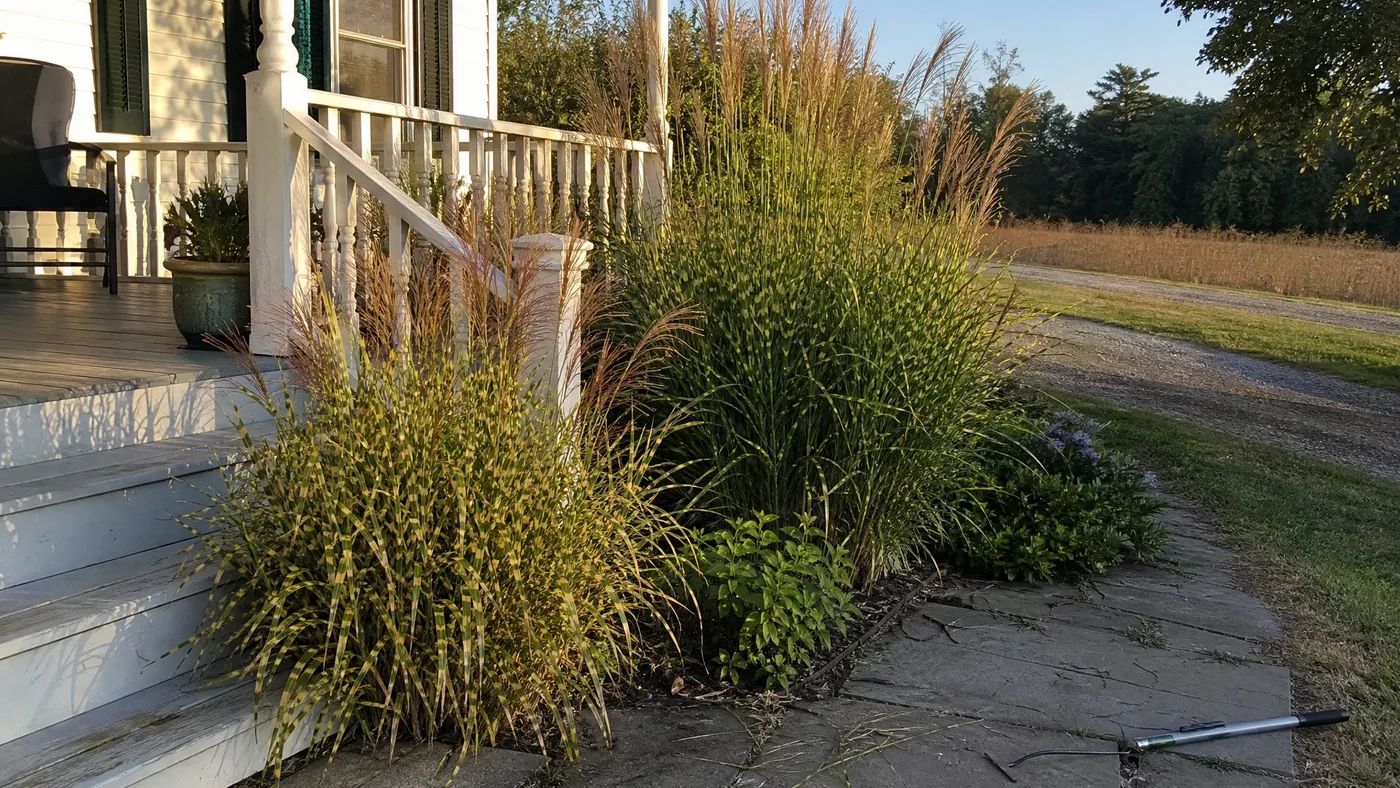
Picture a low sun raking across a garden bed in late afternoon. One grass throws a long, loose shadow that reaches the path, and the other throws a short, tidy one that stays inside its own edge. Those two shadows are the whole story of this comparison.
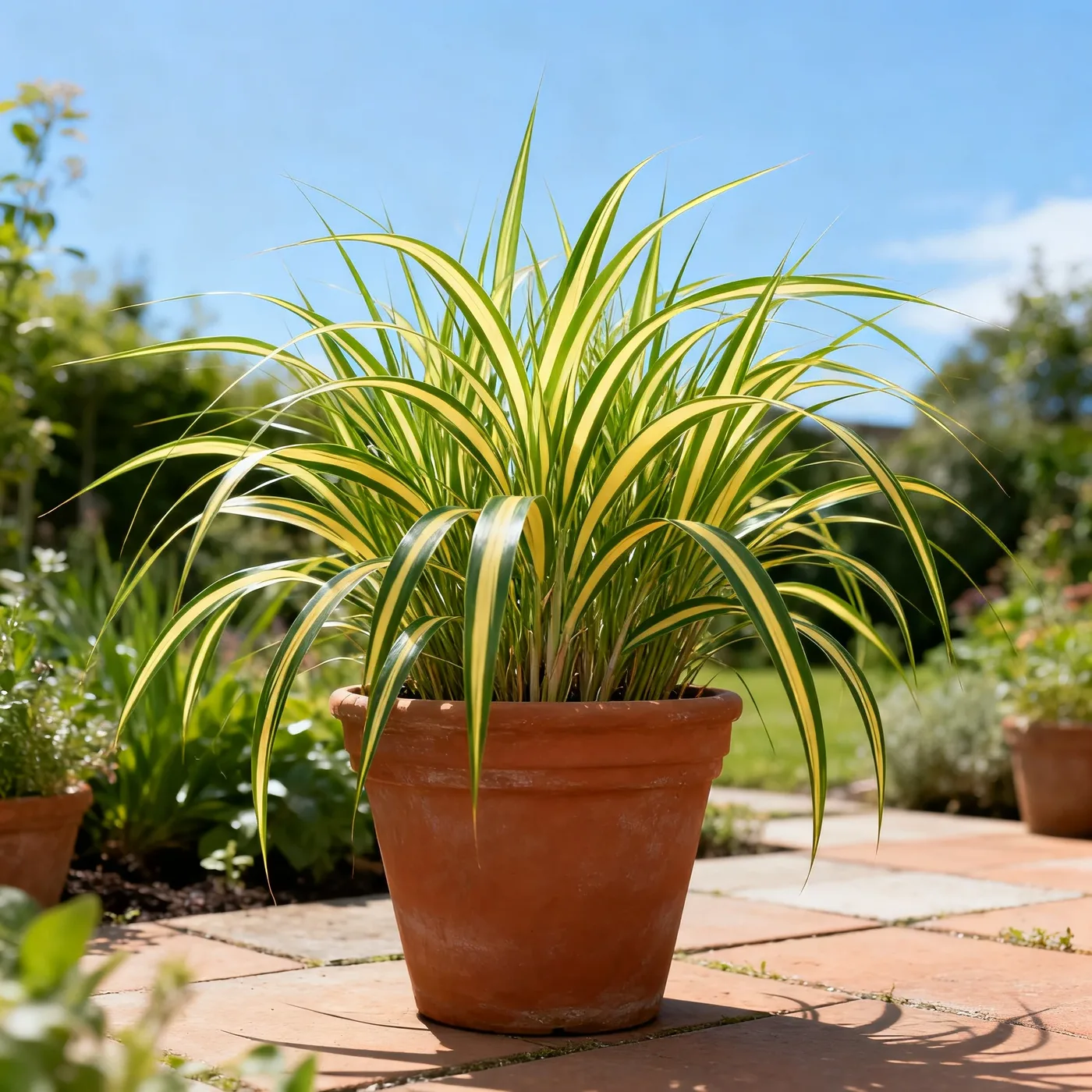
One of the most common questions we get is, "Is Little Zebra just a smaller zebra grass, or a different plant?" Both are Miscanthus sinensis, but they are separate cultivars with their own height, habit and banding. Pick the wrong one and you end up with a screen where you wanted an edge, or an edge where you needed a screen.
This guide covers everything you need to know about telling Dwarf Zebra Grass from standard Zebra Grass, from mature size and clump shape to banding, landscape role, late-summer posture and reading the nursery tag.
Three to Five Feet Against Six to Seven Feet
Stand the two plants side by side and height settles the argument before anything else does. Dwarf Zebra Grass reaches 3.3–5 feet tall with a spread of about 1.6–3.3 feet, which puts the top of the clump somewhere between hip and shoulder height on most adults. Standard Zebra Grass, the cultivar Zebrinus, runs around 6.5 feet.
NC State puts Zebrinus at 6–7 feet, so a full-grown plant looks you in the eye and keeps going past a standard doorway. That is a hedge's worth of material in a single clump. The dwarf never gets there, and the gap is far more than a few inches you could trim away.
The table below lines up the traits people ask us about most.
| Trait | Dwarf Zebra Grass | Zebra Grass (Zebrinus) |
|---|---|---|
| Mature height | 3.3–5 feet | 6–7 feet |
| Habit | Clump forming, columnar upright | Upright, tufted |
| Flowers | Reddish-purple, late summer into autumn | Pink-flushed, from August |
| Banding | Yellow bands on dark green leaves | Golden to pale yellow stripes |
You will hear that any big grass can be kept small with a hard cut. It can't. It grows back to its natural height, so choose the size you want on day one. For how quickly the dwarf reaches its numbers, see our guide on how big Dwarf Zebra Grass gets and how fast it grows.
Dwarf Zebra Grass Holds a Dense Clump, Not a Fountain
Little Zebra is a dwarf, compact, clump-forming grass with a columnar upright habit. In the garden that means the leaves rise from a tight crown and arch mostly at the tips, so the plant keeps the outline of a thick shaving brush all season. Seen from the path, it reads as one dense mass with no gaps at the base.
Zebrinus plays on a different scale. Its leaves are long and arching, and on a plant near 6.5 feet the arch has room to spill, so the outline loosens and opens toward a fountain. It is still upright and clump forming. The looseness comes from leaf length and sheer height, not from a sprawling habit.
Footprint on the Ground
The base matters as much as the top. UF/IFAS gives the species as a whole 5 to 10 feet of spread, while the dwarf cultivar stays inside roughly 1.6–3.3 feet. If a grass has ever swallowed its neighbors for you, that is the number to hold on to.
A clump that keeps its own shape also asks little of you. There is no thinning to do and no reining in at the edges. Plant it, give it room for that modest spread, and leave it alone until the yearly cut.
Bands Set Close Together, Bands Set Far Apart
Both grasses wear the same trick, horizontal yellow bands across green leaves, and it is where the name zebra grass comes from. Little Zebra has yellow banding on arching, dark green leaves. Zebrinus bears transverse bands of yellow, with low seed set, so you will not be pulling seedlings out of the bed.
The difference is scale. In our rows, the dwarf's shorter blades carry their bands closer together, and the whole clump takes on a fine, stitched look. On the tall plant the bands sit farther apart along much longer leaves, and they read as bold, slow stripes you can pick out from across the lawn.
How Each One Reads in Light
Light changes everything with banded foliage. With a low sun behind it, the pale bands glow against the darker green, and the dwarf's tighter pattern turns the clump into one shimmering mass. Zebrinus gives you fewer, larger flashes, many of them well above eye level.
The flowers follow the same logic. The dwarf opens reddish-purple plumes in late summer that last into autumn, at a height where you can see them against the bands. Zebrinus carries pink-flushed flowers from August, up where the sky is the background.
Where a Tall Grass Screens and Dwarf Zebra Grass Edges
A grass over 6 feet works like a wall of fabric. It hides the air conditioner, softens a fence and blocks the view into a side window. That is the job to give Zebra Grass, and no dwarf will do it. At 3.3–5 feet, Dwarf Zebra Grass cannot hide anything much taller than a trash can.
Tall Grass as a Screen
If privacy or hiding an eyesore is the goal, we would choose Zebrinus without a second thought, as long as the bed is deep enough to carry it. Set it at the back, give it the width the species suggests, and let it do what a small grass cannot.
We often see tall zebra grass planted at the front of a bed because the tag only said zebra grass. By year three it hides everything behind it.
Dwarf Zebra Grass as an Edge
What the dwarf does instead is edge and accent. At the front or middle of a border, it holds the line between lawn and planting, and its banding gives a plain row of perennials something to play against. Our guide to landscape uses and companion plants goes through the pairings.
Repeated in a row, the clumps knit into a ribbon of fine texture. For how far apart to set them, see spacing for borders and mass plantings.
Upright Dwarf Zebra Grass Against Leaning Giant Stems
Late summer is when the two plants part ways most visibly. Little Zebra's habit is columnar upright, and its modest height is part of why it keeps that shape when the plumes open. A grass near 6.5 feet carries its flowers on a long lever, so rain and wind have more to work with, and a leaning clump is the usual result.
Shorter stems simply have less leverage working against them. Our dwarf plants stand in full sun in the same conditions that make taller grasses lean, and we do not stake them. The tall cultivar is a fine plant, but it asks more of the site.
Light and Posture
Sun plays a part too. Little Zebra wants full sun, while the species tolerates partial shade, meaning 2–6 hours of direct sun. Our advice is to give the dwarf full sun if you want the tightest, straightest clump, and our guide to sun and light needs covers the trade-offs.
Some advice says every tall grass should simply be staked. What we tell customers is to choose a height your site can carry and skip the staking altogether.
Reading a Nursery Tag Before You Buy
Zebra grass is a loose name. A pot labeled only "zebra grass" or only Miscanthus sinensis could be almost anything, because the species ranges from 4–12 feet. In small pots the dwarf and the tall one look much alike, which is exactly why the tag matters more than your eyes.
What a Mislabeled Plant Looks Like
The warning signs are easy to spot once you know them. A tag that says only "zebra grass," gives no cultivar name or lists a mature height of 6–7 feet is describing Zebrinus, not the dwarf. If it also claims the plant stays small, the claim and the plant do not match.
What the Right Tag Says
A correct tag for ours reads Miscanthus sinensis 'Little Zebra', with the cultivar name in single quotes. Use this short checklist at the shelf:
- The full botanical name with 'Little Zebra' spelled out, not just a common name.
- A mature height in the 3–5 foot range, not 6–7 feet.
- A hardiness range for your zone. Sources vary, with NC State listing the species at zones 5a–9b and UF/IFAS at 4 through 9, so check with your local extension service.
- Yellow bands visible on the leaves, even in a small pot.
Our buying guide on pot sizes covers what else to look at before you carry one to the register.
Dwarf Zebra Grass Where the Tall One Won't Fit
Some spaces simply rule out a 6 to 7 foot grass: a narrow bed along a walk, the strip under a window, a small front yard where one big clump would eat the lawn. Dwarf Zebra Grass fits all of them, because a spread of roughly 1.6–3.3 feet leaves room for a path, a bench or a second plant beside it.
It also works in a container, which a plant near 6.5 feet outgrows almost at once. A large pot gives you the banded foliage and late-summer plumes on a patio, and our guide to growing Dwarf Zebra Grass in containers shows how.
The easy care carries over. Little Zebra takes full sun and chalk, clay, loam and sand soils at any pH, and the species is quite drought tolerant. Little Zebra also shows good resistance to phytophthora, and the species is deer resistant. Few plants this ornamental ask so little.
Choosing Dwarf Zebra Grass Over Its Taller Namesake
Our position is simple. Choose Zebra Grass when you need a 6–7 foot screen and have the deep bed to hold it. Choose Dwarf Zebra Grass for nearly everything else: borders, small yards, containers and any place where you want banded texture without a wall. For most home gardens, we would pick the dwarf every time.
Check the tag, check the height and check the cultivar name, and the rest takes care of itself. Picture that low sun one more time, now falling on a compact, banded clump set beside the walk, with the bed still open around it where the taller grass would have overwhelmed everything.
Dwarf Zebra Grass
Nursery-grown Dwarf Zebra Grass in sizes from Quart, shipped to your door.
From $26.99
Shop Now →On our farms, Dwarf Zebra Grass gets open, sunny ground and soil that is moderately fertile and drains well, which keeps the clumps upright and the bands crisp. Every plant we sell is raised on those same farms, whether it is a tree, a shrub or a top-quality grass like this one. If the dwarf is the better fit for your garden, see what is in stock now in our shop.