Dwarf Zebra Grass vs Feather Reed Grass: Habit and Bloom Time
Picture the graph paper on the kitchen table in late winter, a ten-year plan sketched in pencil, with one rectangle marked GRASS along the back of the border. That rectangle has to earn its space, and it has to earn its cost in dollars and in Saturdays. Pick the wrong shape and you spend years working around it. Pick the right one and the border looks settled with very little attention.
Dwarf Zebra Grass and Karl Foerster feather reed grass both turn up on short lists for that rectangle, yet they solve opposite problems. One is a banded, arching mound that peaks late in the year. The other is a narrow green column that blooms early and stands all winter. Read on for how the two compare on layout, bloom calendar, shape in weather, upkeep and ten-year cost, and which one we would put in your rectangle.
Planning the Whole Border Over Five Years
Start with the job, not the plant. A grass in a border is hired to do something specific: screen a utility box, soften a hard edge, repeat a shape down a long bed, or give the eye a place to rest between flowering perennials. Write that job next to the rectangle before you look at a single plant tag.
Then set the timeline. Neither grass looks finished in its first season, and both need a few years to fill the space you give them. Plan the early seasons around gaps, with annuals or short perennials covering bare soil, and do not crowd the grass to speed things up. Our spacing guide for borders and mass plantings covers the numbers for Dwarf Zebra Grass.
Check climate next. Dwarf Zebra Grass is a Miscanthus sinensis cultivar, and NC State lists the species in USDA zones 5a through 9b. Karl Foerster is listed for the same range, so hardiness rarely decides this choice.
That leaves the budget in its two currencies, money and attention. Neither grass needs much of either, and the real difference is when you pay it. One asks for a bigger footprint up front, the other asks for less ground but more thought about what stands beside it.
Where Mounded and Upright Shapes Fit the Layout
The two plants stand at nearly the same height and take very different amounts of ground. Little Zebra stands about 3.3–5 feet tall with a spread of roughly 1.6–3.3 feet. Karl Foerster stands 3–5 feet tall and only 1–1.5 feet wide. Set side by side, one is a fountain and the other is a post.
That width gap decides most layouts. A mound can fill a corner, hide the bare knees of a leggy shrub, or sit at a bed's front edge and spill over the path. A column cannot do any of that, but it can stand in a tight strip beside a walkway or fence where a mound would crowd the traffic.
Customers usually ask us which one screens better. In a row, a column leaves gaps between plants for years, while mounds knit into a continuous low wall faster.
Pairing With Neighbors
Use the shape to decide the supporting cast. These pairings are the ones we would draw on the graph paper:
- Plant Dwarf Zebra Grass in front of taller, plain-leaved shrubs, where the gold banding gets a dark backdrop and the arching blades hide the shrub bases.
- Repeat Karl Foerster three or four times along a straight edge to set a rhythm, with rounded perennials tucked in between the columns.
- Avoid putting the two next to each other as equals. Each makes the other look like a mistake, and one clear shape per bed reads better.
Our guide to landscape uses and companion plants for Dwarf Zebra Grass has more combinations.
Dwarf Zebra Grass Plumes Arrive After Feather Reed Fades
Bloom time is where the calendar splits. Karl Foerster's flowers appear in early to mid-summer and the stalks stay upright throughout the winter. Dwarf Zebra Grass waits. It produces reddish-purple flowers in late summer, which last until autumn.
In practice, the feather reed grass has already made its show by the time the plumes on Dwarf Zebra Grass open. Put them in the same bed and you get a handoff instead of a pile-up, though they will never be at their best together.
The Early Window
Early-summer interest matters if your border is quiet in June. Karl Foerster fills that gap with upright flower stalks while many perennials are still building leaves. If June is the month you entertain, that column earns its place.
The Late Window
Dwarf Zebra Grass carries the border when the summer perennials start to tire. The plumes stay into the first cool weeks, and our guide on when Dwarf Zebra Grass blooms and how long the plumes last gives the details. Late color is worth more to us than early color, because fall is when most borders look thin.
How a Dwarf Zebra Grass Clump Holds Its Shape
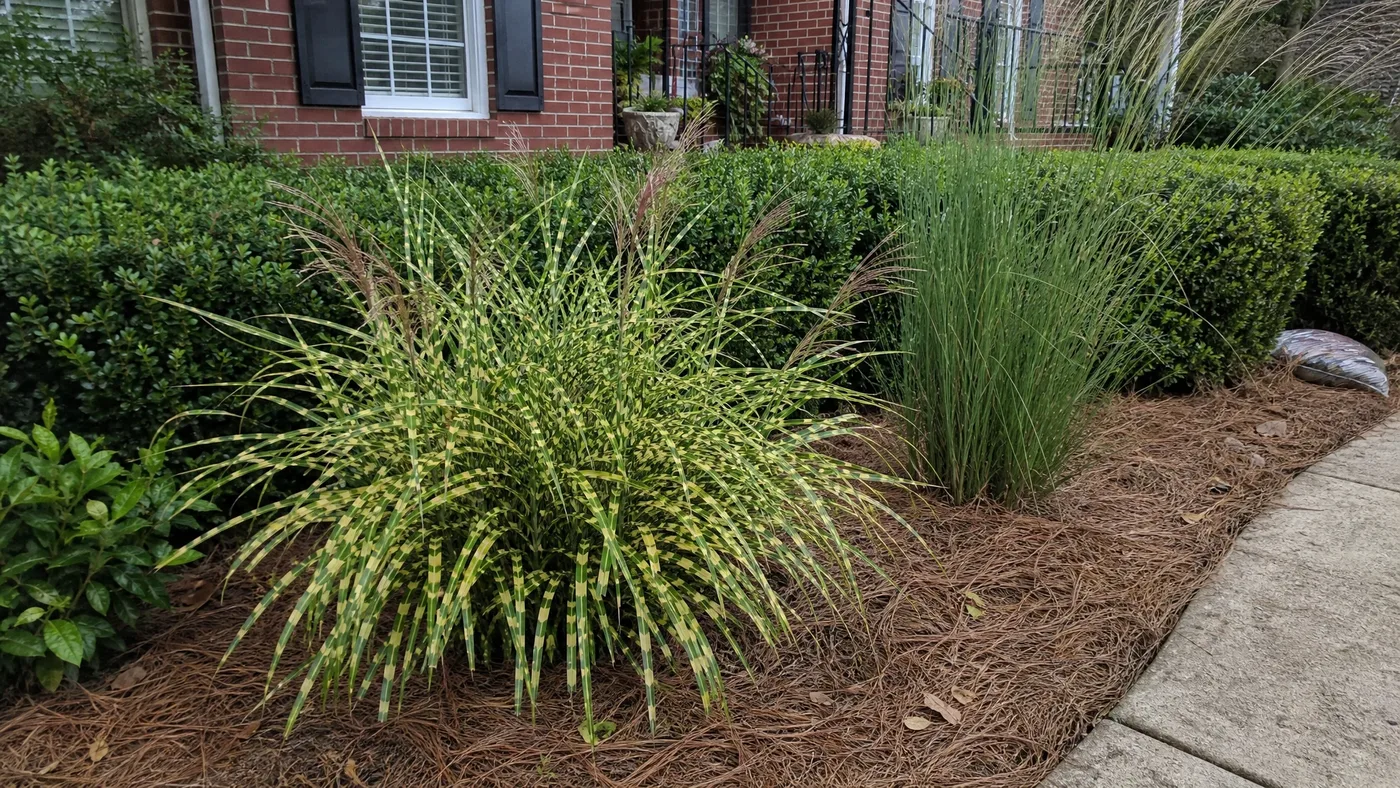
Little Zebra is a dwarf, compact, clump-forming deciduous grass with arching leaves. That arch is the whole character of the plant. The blades rise from the crown, bend at the top and spill outward, so the clump reads as a rounded fountain rather than a vertical line.
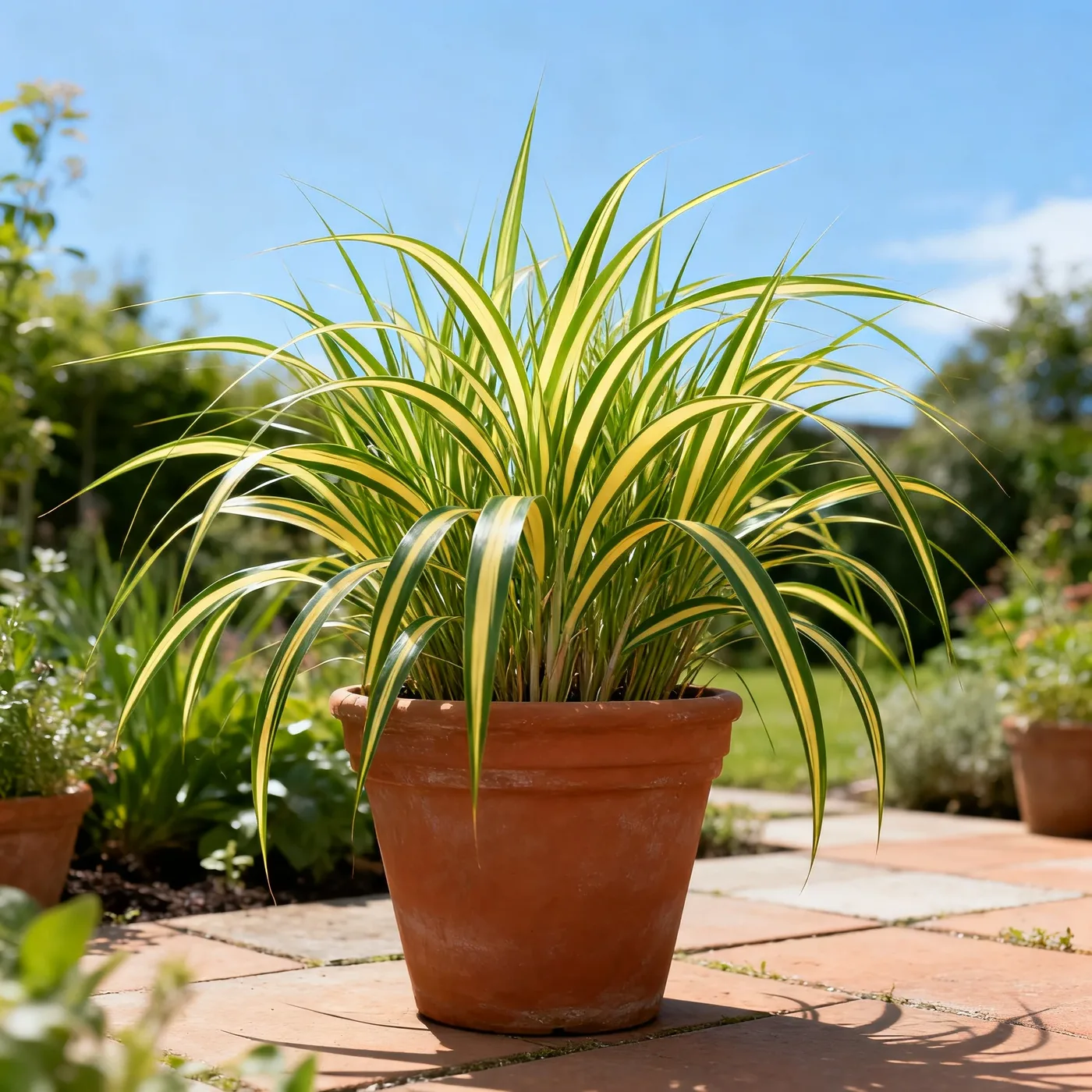
Karl Foerster grows as a clumping, erect plant. The blades stay tight to the center, and the plant keeps its columnar outline into the next spring. It is the more disciplined shape, and in a windy winter bed it is the one that still looks like a plan.
Weather exposes the difference. An arching mound opens a little after heavy rain and rights itself as it dries, which is part of its soft look. A column does not lean the same way, but it tends to fall over if grown in shade, so give Karl Foerster full sun.
Dwarf Zebra Grass is also a full-sun plant. Both reward the same open site, which keeps the layout simple. In winter the mound browns and settles while the column keeps its outline, so decide whether you want that winter structure or would rather clear the bed early.
Upkeep Costs of Dividing, Cutting and Staking
Add up the chores over several seasons and the two plants cost about the same few hours a year. The difference is in when those hours land. The table below sets out the main tasks for each grass.
| Task | Dwarf Zebra Grass | Karl Foerster |
|---|---|---|
| Cutting back | Once a year, before new growth starts | Once a year, but stalks stay up all winter, so timing is your choice |
| Dividing | When the clump outgrows its spot, not on a schedule | When the clump outgrows its spot |
| Staking | Not part of our routine in full sun | Avoided by planting in full sun |
| Feeding and watering | Little once established | Little once established |
Cutting is the one chore you cannot skip. Karl Foerster's standing stalks tempt people to leave them until spring, which looks good under frost but adds one more job to a busy March. We cover the timing for the other grass in when and how to cut back Dwarf Zebra Grass each year.
Dividing is a decision you make from the clump itself. If the center looks thin or the mound is crowding its neighbors, lift it and split it, following our steps for dividing Dwarf Zebra Grass. In our rows we often see clumps go several seasons without it.
The cost of staking is mostly avoidable. Good light and a sound site remove the need for it in either plant, which is why we treat staking as a sign that the site is wrong, not that the plant is weak.
A Single Dwarf Zebra Grass Leaf Up Close
Pick one blade and look at it. On Dwarf Zebra Grass it is narrow, dark green and bent in a gentle arch, with horizontal yellow bands crossing it at intervals. The cultivar grows in acid, alkaline or neutral soil, so the banding does not depend on a fussy soil, though it does want full sun.
Karl Foerster's blade is plain green and stands straight. There is no pattern to look at, which is the point. Where the zebra leaf asks for attention from up close, the feather reed blade works as a clean vertical in the background.
The plume detail separates them again. The Dwarf Zebra Grass flower opens reddish-purple in late summer, a warmer tone that picks up the gold of the banded leaf below it. Karl Foerster's early seed heads rise on slim stalks above a mass of plain foliage.
That is why we think of the zebra leaf as a feature for the front of a bed. A pattern on a blade only works if you can see the blade, and a column set at the back hides most of its leaves anyway.
Ten Years of Dwarf Zebra Grass Costs
Run the ten years on the graph paper. Both grasses are bought once, planted once and left largely alone. UF/IFAS reports no serious pests normally seen on the Miscanthus species, and deer tend to leave it alone. Karl Foerster is also listed as highly resistant to deer and rabbit grazing, so replacement costs rarely arise. For prices, check what is current in your area, as we do not quote them here.
Dwarf Zebra Grass spends more ground and returns more shape. Because each clump spreads wide, you buy fewer plants for a mounded border than for a row of narrow columns. We grow it ourselves, so we can tell you what a young clump looks like before it goes in your bed.
Karl Foerster spends less ground and returns more height per square foot, along with earlier bloom and a winter outline. If your space is a narrow strip, that trade favors it. If your space is a wide bed with a hard edge to soften, the zebra mound wins.
Our choice is Dwarf Zebra Grass for most borders. It fills the late-summer gap, gives the front of a bed texture, and asks little. We would pick Karl Foerster only for a tight strip or a June show.
Choosing Dwarf Zebra Grass for the Long Run
The two grasses solve different problems. Pick the column for narrow ground and early bloom, and pick the mound for a banded, rounded accent that blooms late and fills a wide space. For most borders we would plant Dwarf Zebra Grass, set it in full sun and leave it to grow in. Ten years, one cut a year, a division only when the clump asks for it, and no staking, for a modest outlay.
Dwarf Zebra Grass
Nursery-grown Dwarf Zebra Grass in sizes from Quart, shipped to your door.
From $26.99
Shop Now →Our growers watch each clump through the year, from the first green in spring to the plumes in late summer and the cut-back in winter, on our own farms in full sun. We grow and sell top-quality grasses as a small business, and we would be glad to help you fill that rectangle. When you are ready to plant, take a look at our shop.