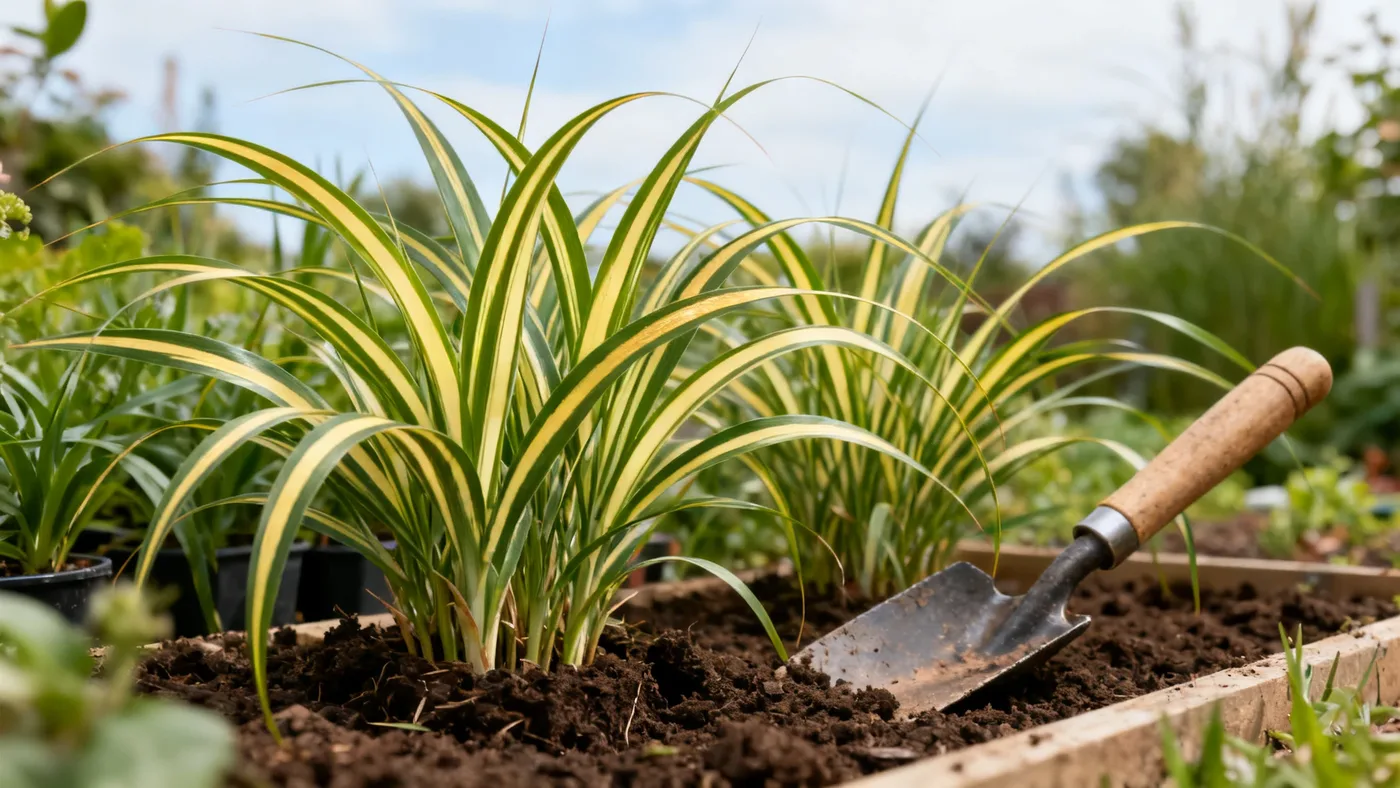
Dwarf Zebra Grass Spacing for Borders and Mass Plantings
Getting the spacing right is one of the most overlooked steps in planting Dwarf Zebra Grass (Miscanthus sinensis 'Little Zebra'). Plant them too close, and they'll crowd each other, reducing air flow and increasing disease pressure. Space them too far apart, and you'll wait longer for that dense, polished border you're imagining. This guide walks you through the exact distances and patterns that work, so you can plant with confidence.
Understanding Dwarf Zebra Grass Dimensions
Dwarf Zebra Grass reaches a mature width of 2 to 3 feet. The foliage height is typically 3 to 4 feet, and with the flower plumes, the plant reaches 4 to 5 feet tall. These numbers matter because they determine how far apart you need to space plants to create a full, cohesive look without crowding.
Growth happens at a moderate pace. Most plants reach their full mature size in about 2 to 3 growing seasons. That timing is important: if you space plants by their final width immediately, you'll have gaps for the first two seasons. Understanding this trade-off helps you decide whether to plant closely now and thin later, or space for long-term maturity from the start.
Spacing Guidelines for Different Effects
The standard spacing recommendation for Dwarf Zebra Grass is 24 to 36 inches apart, measured from plant center to plant center. That translates to anywhere from 2 feet minimum to 3 feet for mature, wide clumps. For most home gardens, 30 inches makes a practical middle ground.
Closer spacing at 24 inches works best if you want a fuller look by year two, especially for a border edge or low hedge. The plants will begin to fill in during the second season, creating a unified planting by year three. Wider spacing at 36 inches suits gardeners who can wait a full 2 to 3 seasons for that dense, finished appearance, or who prefer to showcase each clump individually.
For mass plantings or drifts, tighter spacing (24 to 28 inches) tends to look intentional and lush. For accent plantings where you want each clump to stand out, move toward the 30 to 36 inch range.
Materials and Tools Needed
- Measuring tape or landscape string
- Stakes or garden markers to mark planting locations
- Shovel or spade
- Work gloves
- Dwarf Zebra Grass plants (nursery-grown, usually sold in quart or #1 containers)
- Compost or aged manure for soil amendment (optional)
- Water source and hose or watering can
Step-by-Step Planting Guide
Step 1: Select Your Location
Dwarf Zebra Grass performs best in full sun, defined as at least 6 hours of direct sunlight daily. Light or part shade is tolerated, but foliage becomes looser and the distinctive horizontal banding diminishes. Choose a spot with good drainage. The plant adapts to many soil types, including clay, but prefers moist, well-drained soil and will not tolerate standing water.
Step 2: Measure and Mark Spacing
Decide whether you're planting at 24, 30, or 36 inches based on your design goals. Lay out stakes or use landscape string to mark a grid or staggered pattern. Staggered rows (where plants offset so they don't line up directly behind each other) often look more natural than rigid grids, though both work well. Use your measuring tape to confirm distances between each marked spot, measuring from center point to center point.
Step 3: Prepare Individual Planting Holes
Dig a hole as deep as the root ball and roughly twice as wide. If your soil is clay-heavy or poorly draining, work in 1 to 2 inches of compost to improve structure. Create a slight mound in the center of each hole so the crown of the plant sits level with the finished ground surface.
Step 4: Plant and Position
Remove the plant from its container and gently tease out any circling roots. Set the plant in the hole so the top of the root ball is level with the surrounding soil. Backfill with soil, pressing gently to eliminate air pockets. Avoid planting too deep. The crown, where new shoots emerge, should be at or just slightly above ground level.
Step 5: Water Immediately
Water each plant right after planting. Soak the soil around the base until the ground is wet 4 to 6 inches deep. This settles soil around the roots and helps establish contact. Water at the base, not from above, to minimize stress on newly planted foliage.
Step 6: Maintain Consistent Moisture for Two Seasons
For the first two growing seasons, keep the soil consistently moist (but not soggy) during active growth in spring and summer. Once established, Dwarf Zebra Grass is drought tolerant and needs little supplemental water except during extended dry periods. A light mulch layer helps retain moisture without piling against the crown.
Tips for Successful Spacing and Planting
Plant at the right time. Spring planting after the last frost is best for most regions within USDA zones 4 to 9. Early fall planting works in milder zones but gives plants less time to establish before cold weather. Spring-planted grass has the full growing season to develop roots.
Be patient with spring emergence. Dwarf Zebra Grass is slow to emerge in spring and may look dead longer than other perennials. Don't assume the plant is gone. Wait until you see new growth before removing or replacing it.
Avoid over-fertilizing. This is a light feeder. A moderate, balanced fertilizer application in spring is optional. Too much nitrogen causes floppy growth and reduces structural integrity.
Plan companion plantings carefully. Account for the 2 to 3 foot width at maturity. Pair Dwarf Zebra Grass with plants that won't be shaded or crowded as clumps expand. Sedum, Rudbeckia (black-eyed Susan), Echinacea (coneflower), Russian sage, and ornamental sedges work well as companions.
Ensure adequate air flow. Tight spacing in sheltered sites with poor air circulation can trap moisture. If your border is in a sheltered spot or surrounded by walls, lean toward the wider end of the spacing range (30 to 36 inches).
Common Spacing Mistakes to Avoid
Planting closer than 24 inches. Cramping plants stresses them, increases humidity around the crowns, and can lead to rust or leaf blight. Stick to the 24 to 36 inch range. The temptation to achieve an immediate hedge effect is strong, but it backfires.
Measuring from the outer edge of the container. A common error is measuring from the edge of the current pot rather than from the center where the plant will sit. Measure from plant center to plant center for accurate spacing.
Choosing inadequate light. If you place plants at perfect spacing but in shade, they'll grow loose and thin, looking unsightly regardless of spacing. Prioritize sunlight over perfect spacing.
Underestimating the maturation timeline. If you plant at 36 inches to achieve spacing immediately, your border will look sparse for the first two seasons. If you prefer a fuller look sooner, plant closer (24 to 28 inches) and be prepared to thin plants in year three as they mature.
What to Expect
With proper spacing, Dwarf Zebra Grass should fill in gradually over 2 to 3 growing seasons to create a full, integrated border or mass planting. The distinctive creamy-yellow horizontal bands on the green blades become more prominent as clumps mature. In late summer and fall (roughly August through October, depending on your region), plants produce coppery-pink to reddish flower plumes that mature to silvery-tan or white, providing seasonal interest through winter when the dried foliage persists.
For more information on caring for your plants once they're established, read our complete Dwarf Zebra Grass care guide for every season.
Spacing and Planting Quick Reference
| Factor | Specification |
|---|---|
| Recommended spacing | 24 to 36 inches apart (center to center) |
| For faster fill-in | Plant at 24 to 28 inches; expect second-year fullness |
| For mature spacing | Plant at 36 inches; allow 2 to 3 growing seasons |
| Middle-ground spacing | 30 inches (balances wait time and mature spacing) |
| Planting season | Spring after last frost (best); early fall in zones 7 to 9 |
| Sun requirement | Full sun, 6+ hours daily |
| Mature width | 2 to 3 feet |
| Time to full size | 2 to 3 growing seasons |
| Initial watering | Soak immediately after planting; keep moist for first 2 seasons |
| Soil preference | Adaptable; prefers moist, well-drained |
| Do not plant closer than | 24 inches; avoid standing water and heavy shade |