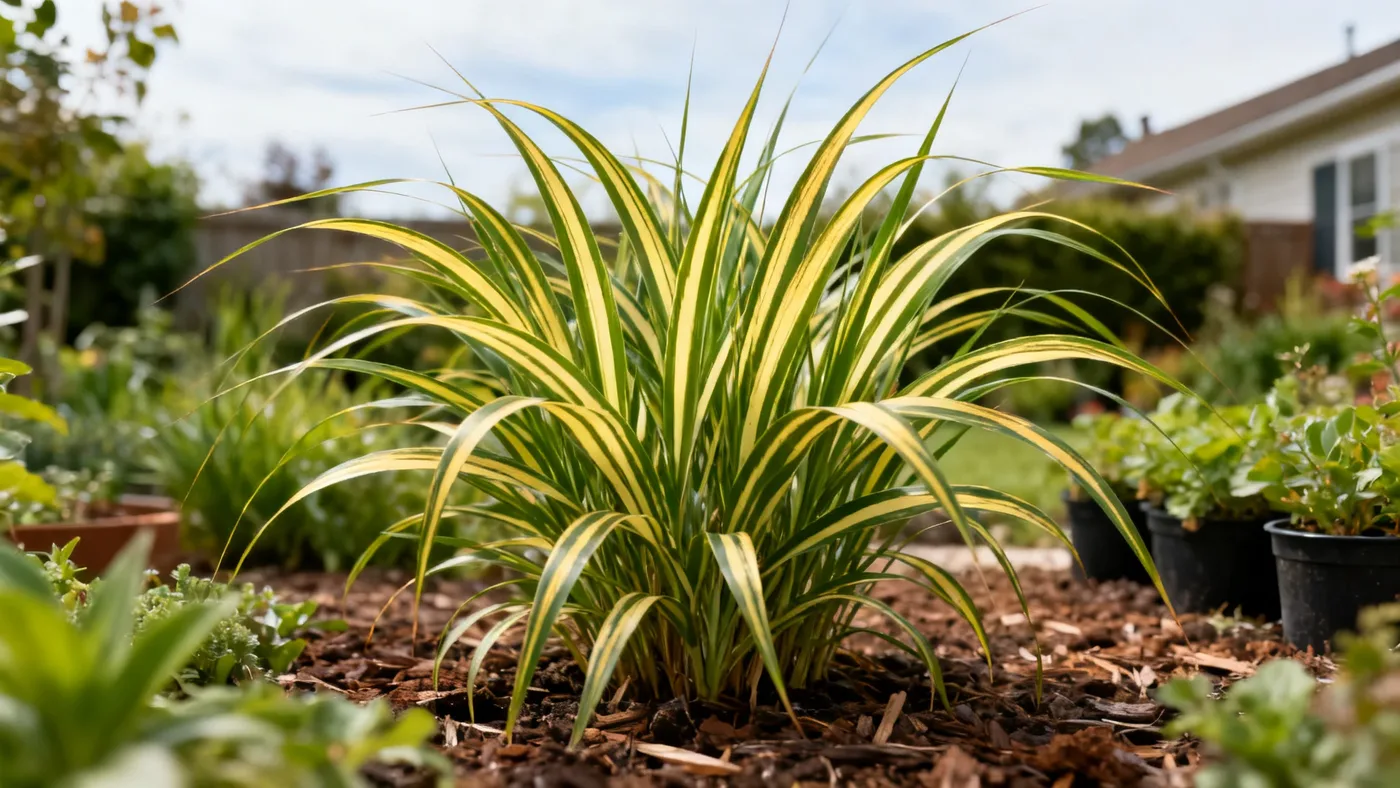
Dwarf Zebra Grass vs Porcupine Grass: What Is the Difference?
Both Dwarf Zebra Grass and Porcupine Grass are compact miscanthus varieties prized for their distinctive horizontal foliage banding and ornamental appeal. If you are deciding between these two for your garden, the differences are subtle but meaningful. Understanding how they grow and where they thrive will help you choose the best cultivar for your landscape.
Quick Comparison Overview
| Attribute | Dwarf Zebra Grass (Miscanthus sinensis 'Little Zebra') | Porcupine Grass (Miscanthus sinensis 'Strictus') |
|---|---|---|
| Growth Habit | Arching, fountain-like form | Rigid, upright columnar form |
| Mature Height (foliage) | 3-4 ft | Comparable, stiffer growth |
| Mature Width | 2-3 ft | Typically narrower, more compact |
| Foliage Banding | Horizontal creamy-yellow/gold bands | Horizontal yellow banding |
| Blade Texture | Narrow, gracefully arching | Narrow, rigid and upright |
| Hardiness | USDA zones 4-9 | Hardy miscanthus (verify for your region) |
| Bloom Time | Late summer into fall (August-October) | Late summer into fall |
| Best Growing Conditions | Full sun (6+ hours), average moisture | Full sun, average moisture |
The Core Difference: Growth Habit
The most important distinction between dwarf zebra grass vs porcupine grass is their growth form. This single difference affects how each plant looks in the landscape and where it works best.
Dwarf Zebra Grass: Fountain-Like and Graceful
Dwarf Zebra Grass grows in a loose, fountain-like mound with gently arching blades. The foliage spreads outward and upward, creating a soft, billowing silhouette. This arching habit is one of the most desirable traits of the Miscanthus sinensis 'Little Zebra' cultivar. The plant reaches 3 to 4 feet in foliage height, with plumes extending to 4 to 5 feet in fall, and spreads 2 to 3 feet wide when mature.
The horizontal creamy-yellow bands run across the soft, narrow blades, creating a striped effect that is especially striking when backlit. This graceful form softens borders and adds movement and texture to mixed plantings without looking stiff or formal.
Porcupine Grass: Upright and Columnar
Porcupine Grass, by contrast, grows in a distinctly upright, columnar form. The blades stand more rigidly vertical, creating a stiffer architectural silhouette. The plant does not arch or billow; instead, it maintains a narrow, pencil-like profile even when mature. This makes it feel more formal and structured in the landscape.
Like dwarf zebra grass, Porcupine Grass also carries horizontal yellow banding across its foliage. The visual effect is similar, but the upright presentation changes how the two plants read in a garden bed.
Size and Spacing Comparison
Both dwarf zebra grass and porcupine grass are marketed as compact miscanthus cultivars, but they differ slightly in their footprint.
Dwarf Zebra Grass reaches a mature width of 2 to 3 feet, which pairs well with its 3 to 4 foot foliage height. Space plants 24 to 36 inches apart when establishing a mass planting. The arching habit means the plant occupies more lateral space as it matures.
Porcupine Grass grows more narrowly. Its upright habit means it takes up less ground space, making it suitable for smaller beds or where vertical accent is desired without lateral spread. For specific spacing recommendations on porcupine grass, consult your local nursery or extension service, as cultivar vigor can vary regionally.
If you are working in a confined space, porcupine grass may be the more space-efficient choice. For a softer, more naturalistic look with wider impact, dwarf zebra grass is the stronger option.
Foliage, Banding, and Seasonal Color
Both cultivars shine for their distinctive horizontal striping, but the execution differs slightly.
Dwarf Zebra Grass displays horizontal creamy-yellow or gold bands that contrast sharply against green summer foliage. In full sun, the banding is most vivid. The arching growth means the striping catches light from multiple angles, amplifying the visual impact. In autumn, the foliage shifts to tan, gold, and bronze tones. The plant retains its dried plumes and tan foliage into winter, providing strong cold-season interest.
Porcupine Grass carries similar horizontal yellow banding. However, because the blades stand upright rather than arch, the striping is viewed from a different perspective. The overall effect is more linear and columnar. Fall color transitions are comparable to dwarf zebra grass, though the upright form means the foliage stands more prominently above surrounding plants.
Hardiness and Growing Conditions
Both are Miscanthus sinensis cultivars, so they share broad hardiness and cultural needs.
Dwarf Zebra Grass thrives in USDA zones 4 through 9. It prefers full sun (6 or more hours daily) and average to medium moisture. The plant is drought tolerant once established and does not like standing water. It adapts to most soils, including clay, though moist, well-drained soil is ideal. Growth is moderate, reaching full mature size in about 2 to 3 years.
Porcupine Grass requires similar conditions: full sun, average moisture, and hardy miscanthus soil tolerance. The upright habit does not change its cultural demands. For porcupine grass hardiness zones and establishment timelines specific to your region, confirm with your local nursery, as some regional variations exist among patented or newer selections.
Pros and Cons: Which Is Right for You?
Dwarf Zebra Grass Pros
- Graceful, fountain-like form adds soft movement to borders
- Widely available at nurseries in quart, #1, and #3 containers
- Cold hardy to zone 4, proven performance across northern gardens
- Horizontal banding visible from multiple angles when blades arch
- Moderate growth rate reaches mature size predictably in 2-3 years
- Strong winter interest with persistent tan foliage and plumes
- Low maintenance once established; drought tolerant
Dwarf Zebra Grass Cons
- Arching habit requires more lateral space (2-3 ft width)
- Can look floppy in too much shade or overly rich soil
- Slow to emerge in spring; may appear dead longer than other perennials
- Benefits from annual late-winter cutback to 4-6 inches
Porcupine Grass Pros
- Rigid, upright form adds strong architectural interest
- Takes up less lateral space than arching miscanthus cultivars
- Excellent for formal or structured garden designs
- Same horizontal banding as zebra grass but in a columnar silhouette
- Does not flop or lodge, even in windy sites or without staking
Porcupine Grass Cons
- Less commonly stocked than dwarf zebra grass; may require special order
- Upright habit is visually rigid; may not suit naturalistic garden styles
- Regional availability and hardiness specifics vary; verify with local nursery
- May offer less softness or movement compared to arching forms
Best For: Use Cases and Landscape Roles
Choose Dwarf Zebra Grass If You Want:
- A soft, textured accent in mixed borders with perennials and coneflowers
- Graceful movement and a cottage or naturalistic garden feel
- Maximum color and interest from horizontal banding viewed at multiple angles
- Proven cold hardiness in zone 4 or colder gardens
- A wide selection of nursery sources and planting sizes
- Strong winter foliage and plume displays
Choose Porcupine Grass If You Want:
- An upright, architectural accent in formal or structured beds
- A narrow, vertical element without lateral spread
- A miscanthus cultivar that will not arch or flop in windy sites
- A specimen plant that stands apart from softer perennials
- A columnar silhouette for small spaces or tight borders
The Verdict
Miscanthus little zebra vs strictus comes down to one fundamental choice: do you prefer soft, arching movement or rigid, upright form? Both carry distinctive horizontal banding, both are compact miscanthus cultivars, and both perform well in full sun with average moisture.
Dwarf Zebra Grass wins for most home gardeners and landscapers because of its graceful fountain habit, proven hardiness to zone 4, and widespread availability. The arching blades showcase the striping beautifully and add a sense of ease to any planting. Its moderate growth rate and ability to reach full maturity in 2 to 3 years make it reliable and predictable. For complete planting, care, and seasonal guidelines, see the complete dwarf zebra grass care guide for every season.
Porcupine Grass excels when you need vertical emphasis without spreading width, especially in formal gardens or tight spaces. Its rigid upright habit and narrower footprint make it a smart alternative if you have size constraints or prefer architectural form.
If you are new to ornamental grasses or building a soft, mixed border, dwarf zebra grass is the more forgiving and visually compelling choice. If you are designing a structured landscape or working with limited space, porcupine grass deserves consideration.
Quick Reference Guide
| Feature | Dwarf Zebra Grass | Porcupine Grass |
|---|---|---|
| Primary Habit | Arching fountain | Rigid upright column |
| Height (foliage) | 3-4 ft | Comparable, very upright |
| Width | 2-3 ft | Narrow, compact |
| Hardiness | Zones 4-9 | Hardy miscanthus (verify locally) |
| Sun Requirement | 6+ hours full sun | Full sun |
| Moisture Preference | Average, drought-tolerant established | Average moisture |
| Years to Maturity | 2-3 years | Verify with nursery |
| Best Garden Style | Naturalistic, cottage, mixed borders | Formal, structured, small spaces |
| Nursery Availability | Widely stocked | Specialty or special order |