Zebra Grass Varieties: How Dwarf Zebra Grass Compares
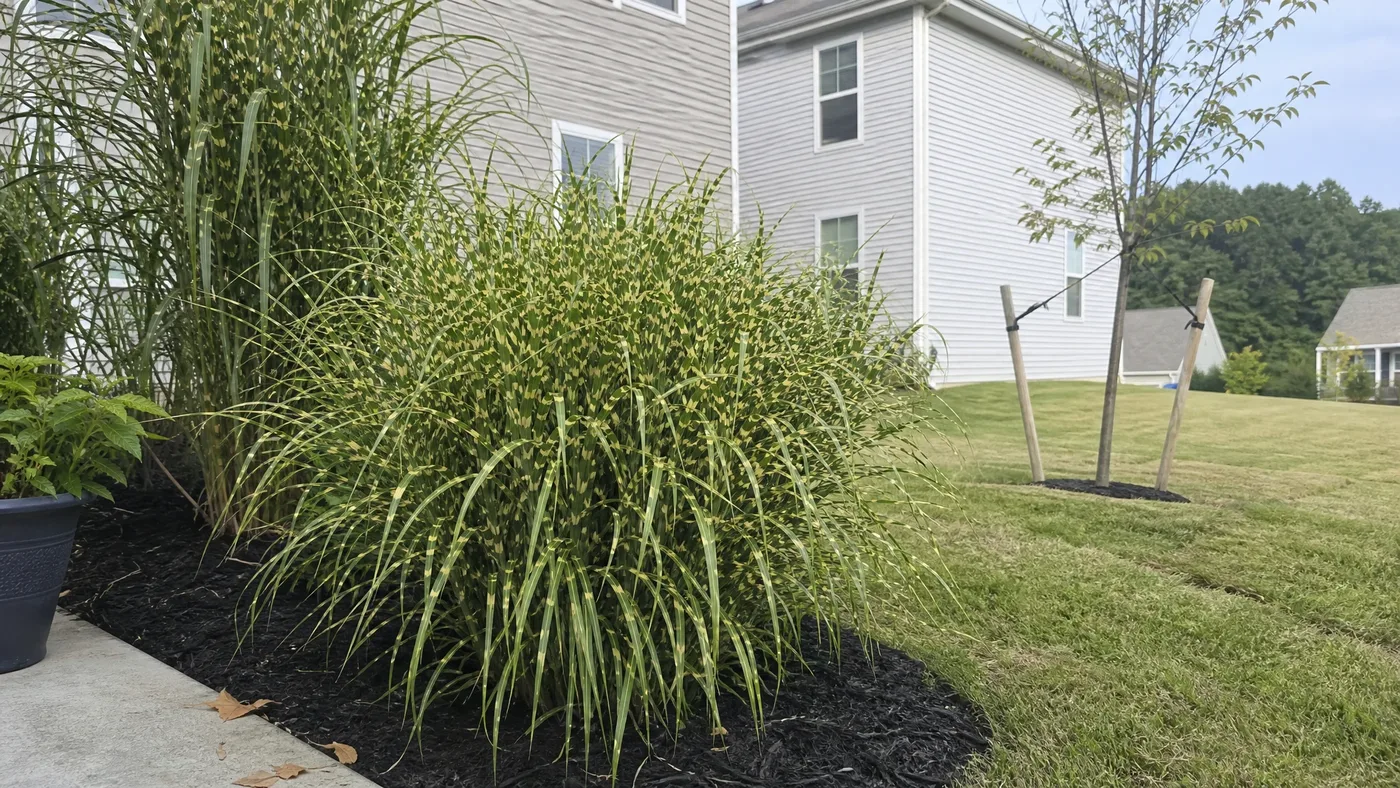
Plant a Zebrinus and a Little Zebra a few feet apart, in the same soil with the same water, and by midsummer they look like relatives who never met. One towers and leans over its neighbors. The other holds a tidy mound at about 3–4 feet. Both carry banded leaves, and both are the same species.
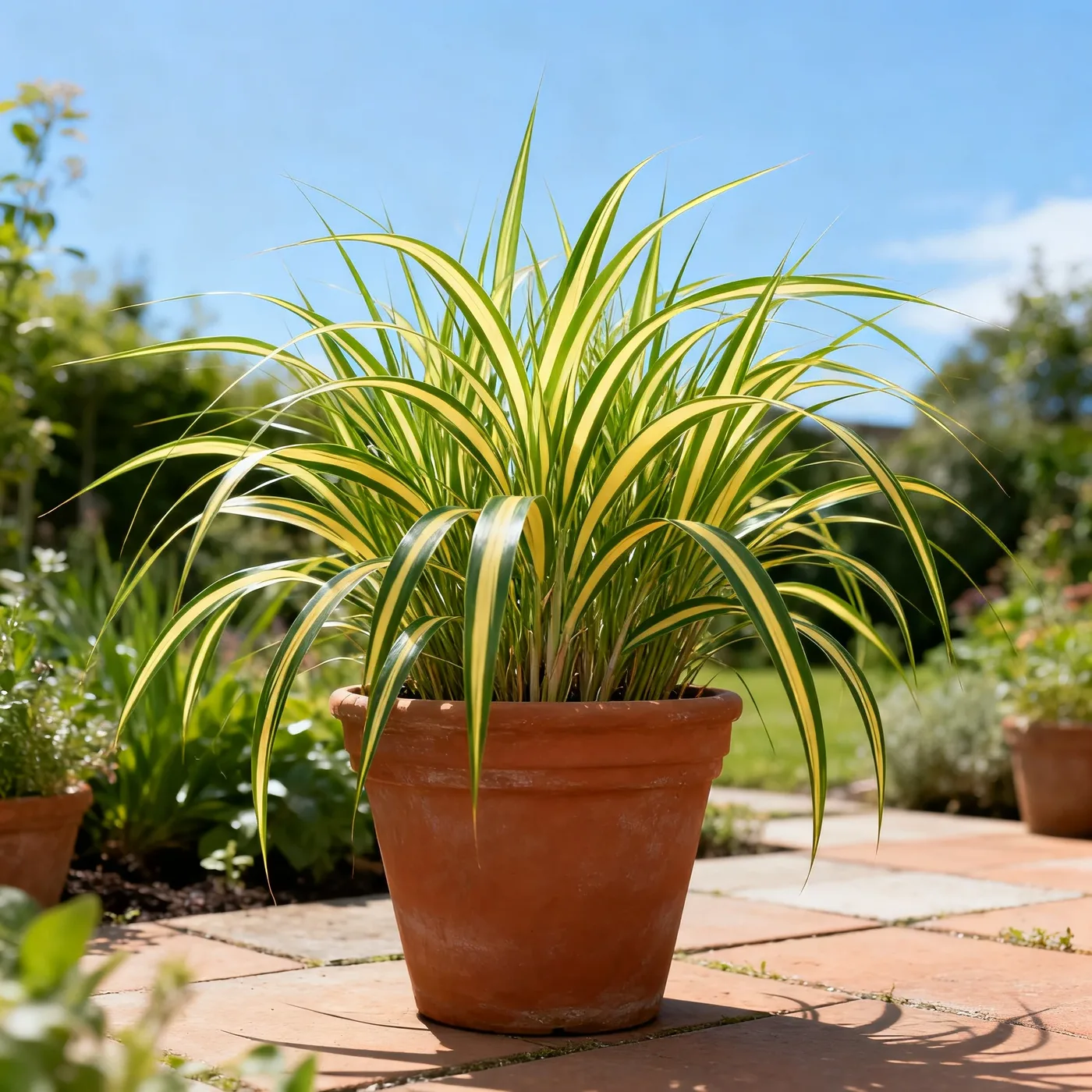
When the bed is identical, the difference has to come from inside the plant, from how each one builds stems and leaves. It matters in practice: a tall banded grass in a small bed sprawls, and a compact one in the wrong spot never gives the show you expected.
In this article, we'll go through what makes banded Miscanthus a class, how Zebrinus and Strictus respond to the same conditions, and why Dwarf Zebra Grass stays small and tightly banded.
Why Banded Miscanthus Became a Garden Class
Banded Miscanthus is a loose group of Miscanthus sinensis cultivars whose leaf blades carry crosswise bands of a lighter color over the green, instead of a lengthwise stripe. Size does not hold the group together. NC State Extension describes the species as running anywhere from 4 to 12 feet tall, so a banded plant can be modest or enormous.
Gardeners treat these plants as one class because the band is the trait you see from across the yard, and because it travels with the cultivar. A cultivar is a single selected plant that is multiplied by division, so each piece keeps the traits of the original. Whatever the band is, it belongs to the cultivar's leaf tissue and does not depend on the weather that year.
The band is only one trait, though. Height, habit and the spacing of the bands are separate traits, and a banded cultivar can share the first and differ on all the others. That is the idea behind this whole comparison. We'll set three banded plants side by side and ask what, inside each, produces the behavior you see.
It helps to keep the species in mind as the baseline. Most Miscanthus sinensis cultivars are clump-forming, deciduous grasses that want full sun, so the banded ones are not strange plants that need special treatment. What changes from one to the next is how strongly each responds to richness and moisture, and that response is what the next three sections trace.
What Zebrinus Does With Rich Soil and Water
Zebrinus is the full-size benchmark. It grows to a height of 6 to 7 feet and a spread of 5 to 10 feet, with yellow bands and a weeping, fountain-like clump. That spread range is wide for a reason: a plant this responsive to its site ends up a different size in different beds.
How Generous Conditions Turn Into a Floppy Clump
The cause and effect is fairly direct. Stems lengthen as their cells take up water and expand, and rich soil supplies the nitrogen that keeps cells dividing. Give Zebrinus both and each stem stretches farther before it firms up. A longer arching stem carries more weight at a greater distance from the crown, so it leans further.
One of the most common questions we get is why a Zebrinus fell open in July. Nearly always, that bed was fed and watered generously. Zebrinus is meant to arch, but generous conditions push the arch past graceful and into a flop.
Fix the Supply, Not the Stems
Common advice says to stake or tie a leaning grass. We would rather remove the cause, because a staked clump still has overlong stems and just hides the problem until the next storm. Skip the extra fertilizer, let the soil dry between waterings once the plant is established, and give it the full spread it wants.
Room matters as much as supply. At the upper end of that 5–10 foot spread, the clump takes up more bed width than it does height, so crowding it against a path or a neighbor forces it to lean into whatever is nearby. Zebrinus also sets little seed, which matters if you worry about seedlings.
Strictus and the Stiff Upright Habit
Strictus, sold as Porcupine Grass, is the upright member of the class. Kansas State describes white horizontally-striped leaves that are slightly broader than some other Miscanthus, and it advertises a height of 48–108 inches, or 4–9 feet. That range is wide enough to include a plant barely taller than Little Zebra and one well above Zebrinus.
A range that wide tells us the site does a lot of the work. Strictus holds its stems straight, so extra water and feeding most likely show up as added height and not as sprawl. A stiff stem carries its own weight without arching, which means the plant has little need to lean. We read that as a structural difference in the stems themselves, though the sources we trust do not measure it.
What the Sparse Bands Suggest
The bands read differently as well. To our eye they sit farther apart along the blade than on the dwarf, and the columnar shape makes each band look more isolated. We have no measured spacing to give you, so treat that as an observation and not a figure.
The practical lesson is to check the height of the exact plant you are buying. With an advertised height of 4 to 9 feet, a lean-grown Strictus and a richly grown one can be very different sizes, and the tag tells you more than the cultivar name does.
Because it stays upright, Strictus suits narrow spots where an arching Zebrinus would crowd a path. Our guide on Dwarf Zebra Grass versus Porcupine Grass compares the two in more detail.
How Dwarf Zebra Grass Stays at Three to Four Feet
A grass stem is built from repeating units. A node is the point where a leaf attaches, and an internode is the stretch of stem between two nodes. Final height is roughly the number of nodes times the length of each internode. A compact result like Dwarf Zebra Grass's is consistent with short internodes, which is why it tops out near 3–4 feet while Zebrinus reaches 6–7.
Dwarf Zebra Grass reaches a height of about 3.3–5 feet and a spread of about 1.6–3.3 feet, and is a dwarf, compact, clump-forming grass. That spread is far narrower than the 4–6 feet of the species. This table puts the three banded plants side by side using our sources.
| Banded grass | Height | Spread |
|---|---|---|
| Zebrinus | 6–7 feet | 5–10 feet |
| Strictus (Porcupine Grass) | 4–9 feet advertised | Not given in our sources |
| Dwarf Zebra Grass | About 3.3–5 feet | About 1.6–3.3 feet |
Lean conditions keep the dwarf near the bottom of its range. Short internodes cap its potential, but rich feeding still pushes it toward the top and loosens the clump. The species is quite drought tolerant and tolerant of soils from wet to dry, so a lean bed is no hardship for it.
You can test the internode idea yourself in late summer. Pick one stem on each banded grass you own, count the leaf attachments and compare how far apart they sit. Our guide on whether you really need to fertilize Dwarf Zebra Grass covers the feeding side, and the answer is usually less than you think.
Why Dwarf Zebra Grass Bands Sit so Close Together
The bands are printed on the leaf blades, and the blades hang from the nodes. That link is why stem spacing and banding go together. Short internodes stack leaves close to one another, so from a normal viewing distance you count more bands in each vertical foot than you would on a taller plant.
The leaves also play a part. A shorter blade carries its bands over less length, so they sit closer together. We think the dense look comes from both effects at once, although we do not have measured band spacing for any of these cultivars. The clump is also narrow, about 1.6–3.3 feet across, so there are fewer gaps between stems.
Three things in your own bed tell you whether the plant is showing its natural pattern:
- Full sun is the exposure this cultivar wants, and a plant in deep shade tends to look duller and looser than one in the open.
- Heavy feeding stretches growth, and stretched growth spaces the bands out, so a fed plant often looks plainer than a lean one.
- A clump that flops open in the center has usually had too much food or water, not too little light.
If the bands have faded, our guide on why Dwarf Zebra Grass loses its stripes goes through the causes. For the plain-named relative, see Dwarf Zebra Grass versus Zebra Grass.
Following Dwarf Zebra Grass Through Its Seasons
To see where the dwarf parts ways with its taller relatives, follow one clump through a full cycle. We'll name each stage for what the plant is doing, and note where Zebrinus and Strictus behave differently.
Shoots Emerge and Bands Appear
New shoots rise from the crown once the weather warms, and the bands show as the blades expand. A dwarf clump has less distance to cover than Zebrinus, so it looks finished sooner and reaches its tidy mound while a taller relative is still stretching.
Hardiness is a question for your local extension service. NC State lists zones 5a–9b for the species, while UF/IFAS says 4 through 9, and Zebrinus is listed for zones 5 through 9. Treat the narrower range as the safer planning figure.
Plumes Rise Over the Foliage
Later in the season the plumes come up. The species' flowers are red to pink, and the cultivar's are reddish-purple. On a 3–5 foot clump the plumes sit nearer eye level than on a 6–7 foot Zebrinus, which makes them easier to enjoy from a path.
Wind-disseminated seed adds to the species' invasive nature in North Carolina. That is one reason we point people to cultivars with low seed set, and why you should check local guidance before planting any Miscanthus.
Straw Stands Through Winter
This is a deciduous grass, so the leaves fade to straw and stand through winter. Shorter stems have less leverage, so we'd expect the dwarf to hold its shape better under wet snow than a tall relative.
The species also has good resistance to phytophthora, a soil-borne water mold, though we'd still keep the crown out of standing water. Cut the straw back before new growth starts, as our guide on cutting back Dwarf Zebra Grass explains.
Where Dwarf Zebra Grass Fits in the Family
The band is the trait the three plants share, and size and habit are what set them apart. A plant shows its natural form only when the conditions match what it was selected for. Zebrinus suits open beds with room for 5–10 feet of spread and soil that holds some moisture, and Strictus suits narrow, upright spots with average soil and space overhead.
Dwarf Zebra Grass suits lean soil, full sun and small beds, where its short internodes and close bands are an advantage. Put it where a tall banded grass would sprawl, and you get the pattern without the flop.
Dwarf Zebra Grass
Nursery-grown Dwarf Zebra Grass in sizes from Quart, shipped to your door.
From $26.99
Shop Now →Full sun and lean, unfussy ground keep Dwarf Zebra Grass short, tidy and upright in our rows, which is the compact habit this guide has been comparing. Each plant we sell, from grasses to trees and shrubs, is grown by us on our own farms and is top quality. When you are ready to choose your variety, browse what is in stock now.