Why Dwarf Zebra Grass Loses Its Stripes and How to Keep Them
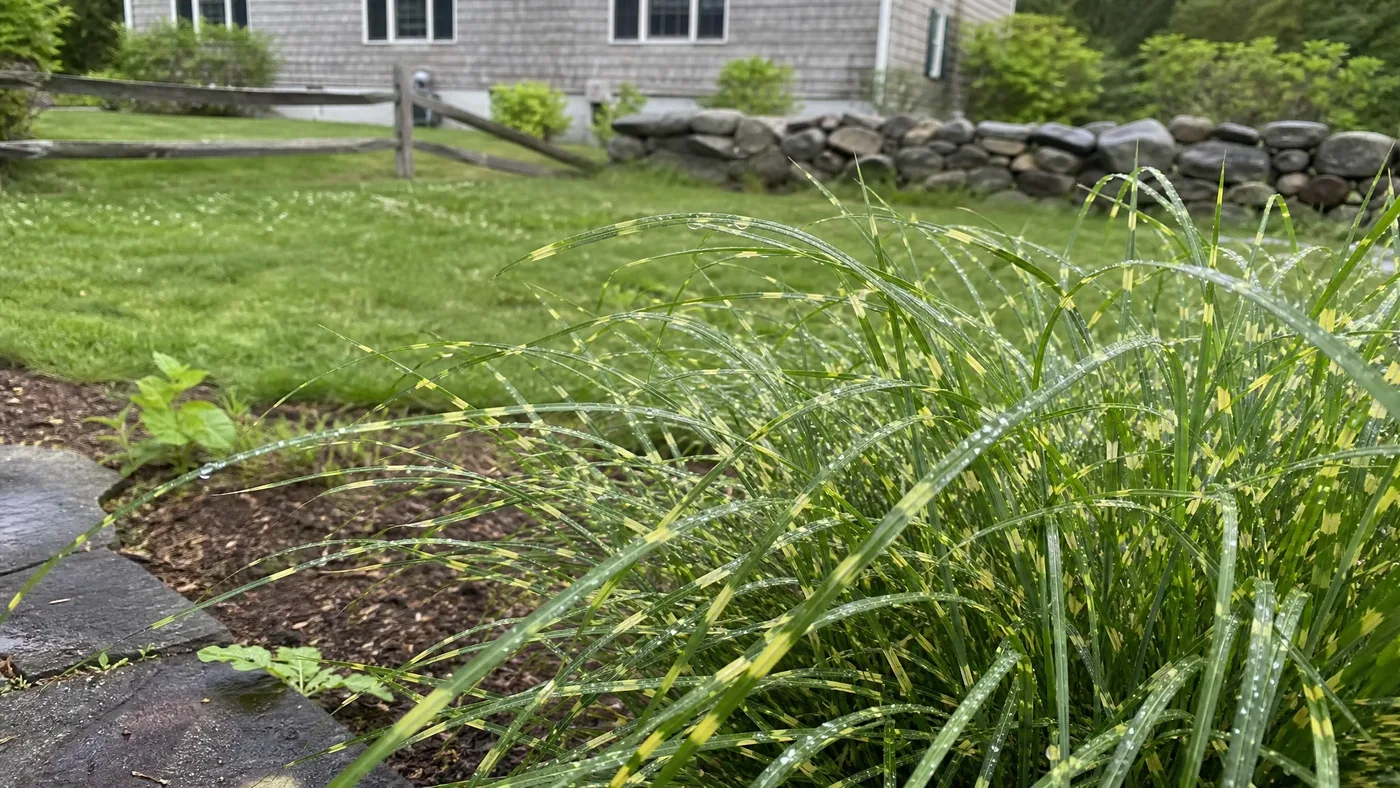
One early spring, a young clump in our rows pushed up plain green from the crown, with not a trace of gold on any blade, and our first thought was that something had gone wrong over winter. Nothing had. By the time the weather turned properly warm, the leaves coming up through the middle were banded across like a ruler, and the green ones around the edge were simply the plant's first, cool-weather work.
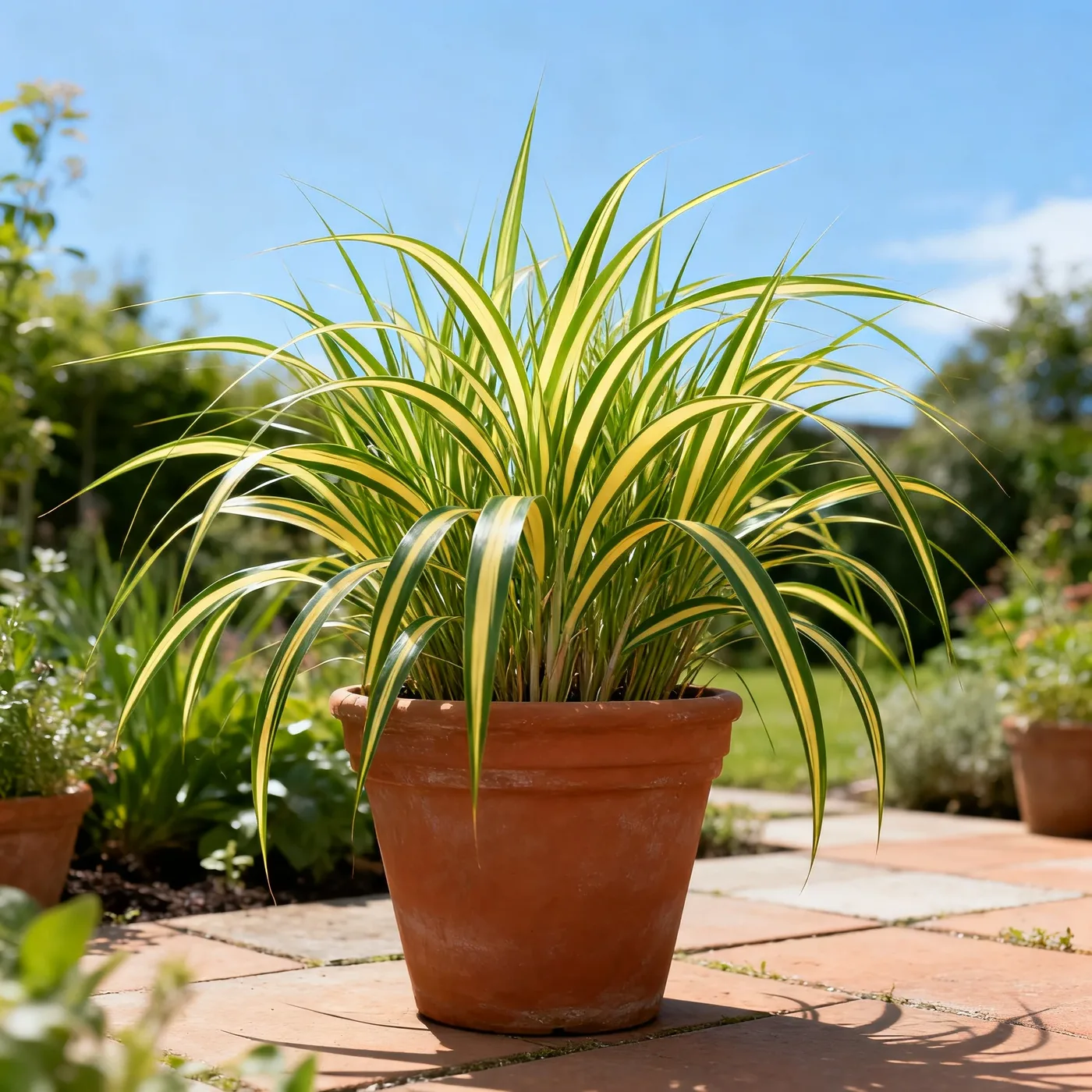
The stripes are the reason anyone buys Little Zebra. Without them you have a pleasant but ordinary green grass about 3–5 feet tall, and with them you have one of the most recognizable clumps in the garden. Nearly every case of lost stripes comes down to light, feeding or timing, and most can be fixed.
Read on for how a band forms in the leaf, what the plant does underground in spring, which conditions dim the gold, how to tell fading from disease, and what to change in placement and feeding.
How a Band Forms Inside the Leaf Blade
Hold a single blade from a midsummer clump up to the light and the pattern is plain: crosswise bands of gold, evenly spaced, with dark green between them and the edges of the blade running straight through. Little Zebra has yellow banding on arching, dark green leaves, and that dark green is the plant's base color. The gold is something the plant adds at certain moments, not a pattern printed on the leaf from the start.
Leaves Grow From the Base
Grass blades extend from the base rather than the tip, so the top of a blade is its oldest part and the section tucked into the clump is the newest. Each band marks a stretch of blade made while conditions favored gold. A stretch made on a cool or dim day comes out green.
A blade that has finished growing never gains a band afterward, however much sun you give it. That is why a change of site or feeding pays off in new leaves, not old ones.
Heat and Light Set the Pattern
As we understand it, warm temperatures and strong light are the cues that switch the gold on. Bright, hot stretches lay down bands, and cool, cloudy or shaded stretches lay down green. The same clump can therefore show a green base, a banded middle and a green flush of new leaves after a cold snap.
Plain green miscanthus has no banding to lose, so nobody wonders about it. Little Zebra carries the trait, but it only shows when the plant gets the conditions to express it.
What Dwarf Zebra Grass Is Doing Underground in Spring
The Crown and Roots Wake First
Cut a clump back in late winter and for weeks it looks as though nothing is happening, just a tuft of stubble and bare soil. Underneath, plenty is. The roots and the crown, the dense knot at the base where every shoot begins, wake as the soil warms, and they do it well before the top shows much. Dead foliage and old flowered stems should be removed in spring, and our cutting back guide covers the timing.
Why Spring Growth Comes Up Plain
The first shoots are built from the crown's reserves on short, cool, weak-light days, which are exactly the conditions that give green blades. Gold needs warmth, and warmth comes later. A clump that emerges green in April is behaving normally, so judge it in summer, not spring.
What we tell customers is to leave it alone through this stretch. Do not feed it to wake it up, and do not dig it out because it looks dull. Because the plant is a compact, clump-forming grass, the crown simply thickens each year, and a fuller crown sends up more shoots and more leaves to carry bands once the weather turns.
Shade, Rich Soil and Cool Weather Dim the Gold
Walk a row of identical plants where one end sits in a neighbor's shade and you can see the difference from the path. The sunny end is banded from top to bottom, and the shaded end is nearly plain green. Three causes account for almost every faded clump, and the table sorts them by what you see and what helps.
| Cause | What you see | What helps |
|---|---|---|
| Low light | Faint or missing bands, loose and leaning growth | Move the clump into full sun |
| Heavy feeding or rich soil | Dark, lush leaves with thin bands | Stop feeding and amending |
| Cool spring or summer | Green early leaves, bands arriving late | Wait for warm weather |
Low Light
This cultivar wants full sun. The species is more forgiving, and NC State says it tolerates partial shade of 2–6 hours of direct sun. That tolerance is why a general "sun or part shade" label can mislead you. A plain green miscanthus shrugs off shade, but on the banded cultivar part shade costs you the very thing you planted it for.
Heavy Feeding
Nitrogen pushes dark, lush, fast growth, and on this plant that growth comes with thin, pale bands. We treat feeding as a cause in its own right, and a later section deals with it in full.
Cool Weather
A cool spring, or a cool summer in a northern garden, delays the gold. The plant is healthy and simply waiting for heat. Nothing you spread or spray will speed that up, which makes this the one cause where patience is the whole fix.
Why Faded Bands on Dwarf Zebra Grass Are Not Disease
Green blades with ghostly bands look alarming, especially next to the crisp gold on a picture tag, but a leaf like that is healthy. Faded banding is a response to conditions, not a pathogen, and it does not spread from plant to plant. The way to tell the two apart is to look at the pattern and the leaf itself.
- Banding runs straight across the blade, repeats at regular intervals and looks the same on both sides of the leaf. Disease spots are scattered and irregular.
- Faded bands are soft in color but the leaf surface is smooth and firm. Rust shows as small orange to brown pustules, often easiest to see on the underside, and they can rub off on your fingers.
- New shoots keep coming up upright and sturdy, and the clump keeps thickening. A struggling plant stalls or collapses.
UF/IFAS notes that rust diseases occasionally infest the foliage of the species, and also that no serious pests are normally seen on it. So rust is possible, but it looks nothing like pale banding. If you do see pustules, our guide to common pests, diseases and problems shows what to do next.
Moving Dwarf Zebra Grass Into More Sun
A clump that leans toward the open side of a bed, with its strongest bands on the leaves facing out, is telling you where it would rather be. If the clump sits in less than full sun, no amount of care elsewhere makes up for it. NC State describes full sun as 6 or more hours of direct sunlight a day, and our sun and light guide goes through the tradeoffs of part shade.
In a container the fix is easy, since you just move the pot to the brightest spot you have. In the ground, a few steps do the job.
- Move it in early spring, right after cutting back and while the new shoots are still short.
- Pick a spot open to the sky through the middle of the day, away from tree edges and walls that throw afternoon shade.
- Dig wide around the crown and lift as much root as you can carry.
- Replant at the same depth, water it in, and keep the soil moist while it settles.
- Skip fertilizer. The move is stress enough.
Expect the first summer after a move to be modest. Roots come first, and the full banding often shows in the second season. If the clump has grown large, moving is a good moment to split it, as our division guide explains.
Holding Back the Fertilizer and the Compost
Beds that get a yearly blanket of compost grow the greenest, fastest clumps of this plant, and they are often the flattest by August. The same goes for beds beside a fed lawn, where nitrogen drifts into the roots every time the lawn is fertilized. The leaves look healthy, but the gold is thin.
Little Zebra grows best in moderately fertile, moist but well-drained soil in full sun. Moderately fertile is the key phrase. This is not a plant that wants a rich bed, and it tolerates a wide range of soils, including clay, loam and sand. We grow ours in exactly that kind of ground, in full sun with good drainage, and the bands come through every summer.
What to Do Instead
Stop feeding the clump. Our guide on whether you really need to fertilize explains why it rarely does. Keep lawn feed and rich mulches away from the crown. If you amend at planting, do it once, lightly, and only in poor or heavy ground.
In a pot, skip slow-release feed that keeps pushing green growth all season. Excess nitrogen cannot be pulled back out of the soil, so give it a full season to wash through and judge the new leaves, not the old ones.
Dwarf Zebra Grass Stripes Return by Midsummer
In a clump that sits in the right place, the year follows a steady rhythm. Early growth is plain green, then as days lengthen and warm up, the new leaves coming from the crown start to carry bands. By midsummer the pattern runs through most of the clump, with the oldest green blades lower down simply staying green.
The reddish-purple flowers arrive in late summer and last until autumn, and they sit above a clump that is by then fully striped.
What Time Alone Fixes
A cool spring, a newly planted clump and a recent move all sort themselves out with warm weather and one more season. Do nothing but give it full sun and water in dry spells.
What Needs a Change From You
If the clump is in shade or the bed is rich, waiting will not help. Move the plant or stop the feeding, and look for the improvement in leaves made after the change. That is the whole system: light and heat make the gold, and the crown supplies new leaves to carry it.
Giving Dwarf Zebra Grass the Time It Needs
Banding is a response, not a disease. Full sun, moderate soil and warm weather bring it out, while shade, heavy feeding and a cool spring dim it. Sort the cause first, change what you can, and then let the crown do its work.
Every year we remember the same sight: a clump that had been plain green into June and, in late summer, stood banded gold from the middle to the tips, as though it had never been anything else.
Dwarf Zebra Grass
Nursery-grown Dwarf Zebra Grass in sizes from Quart, shipped to your door.
From $26.99
Shop Now →Dwarf Zebra Grass does best on our farms in open, full sun and soil with middling fertility that never stays soggy, which is the setup that brings out those gold bands. We are a small team of growers on our own farms, raising top-quality grasses and other plants. If this guide has you ready to try again, pick out a plant for your own garden in our shop.