Is Dwarf Zebra Grass a Perennial? The Short Answer
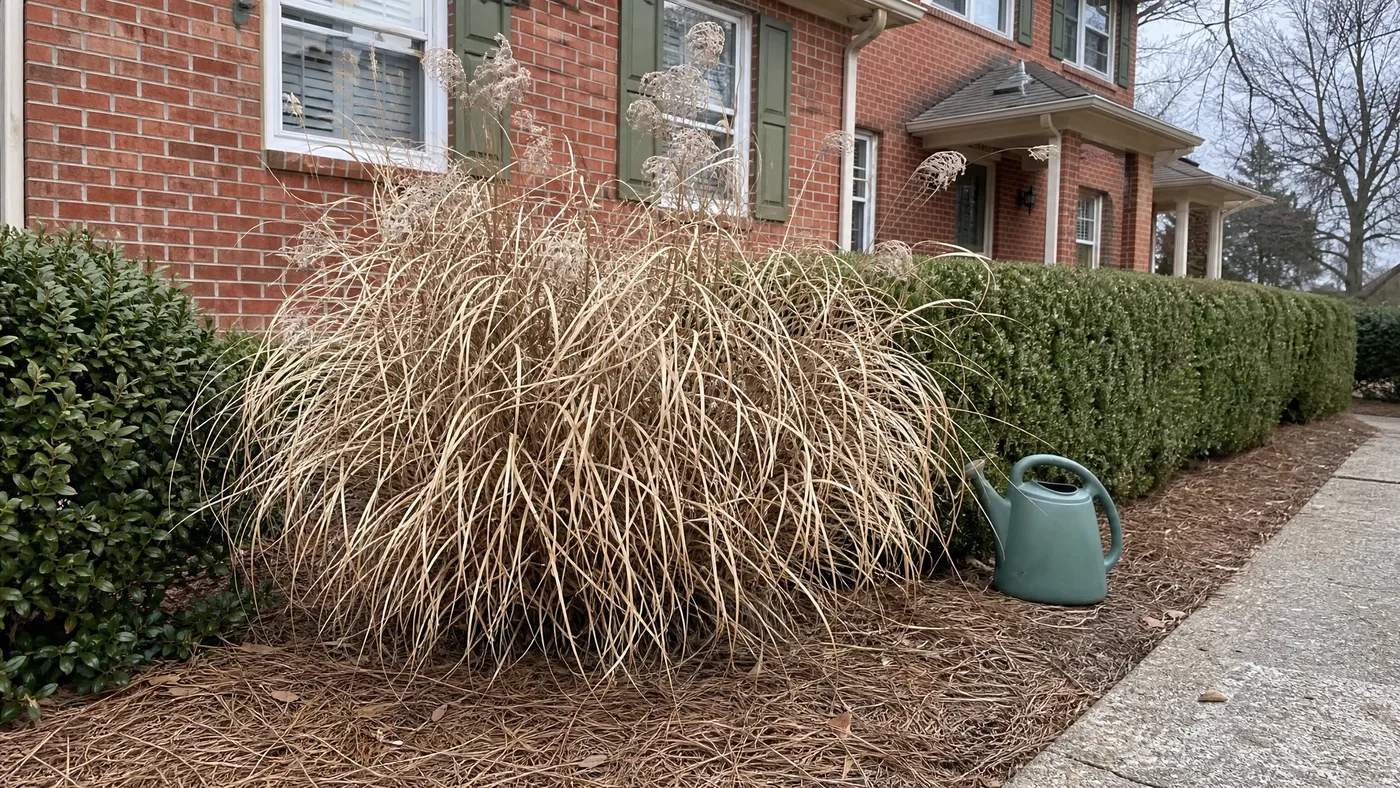
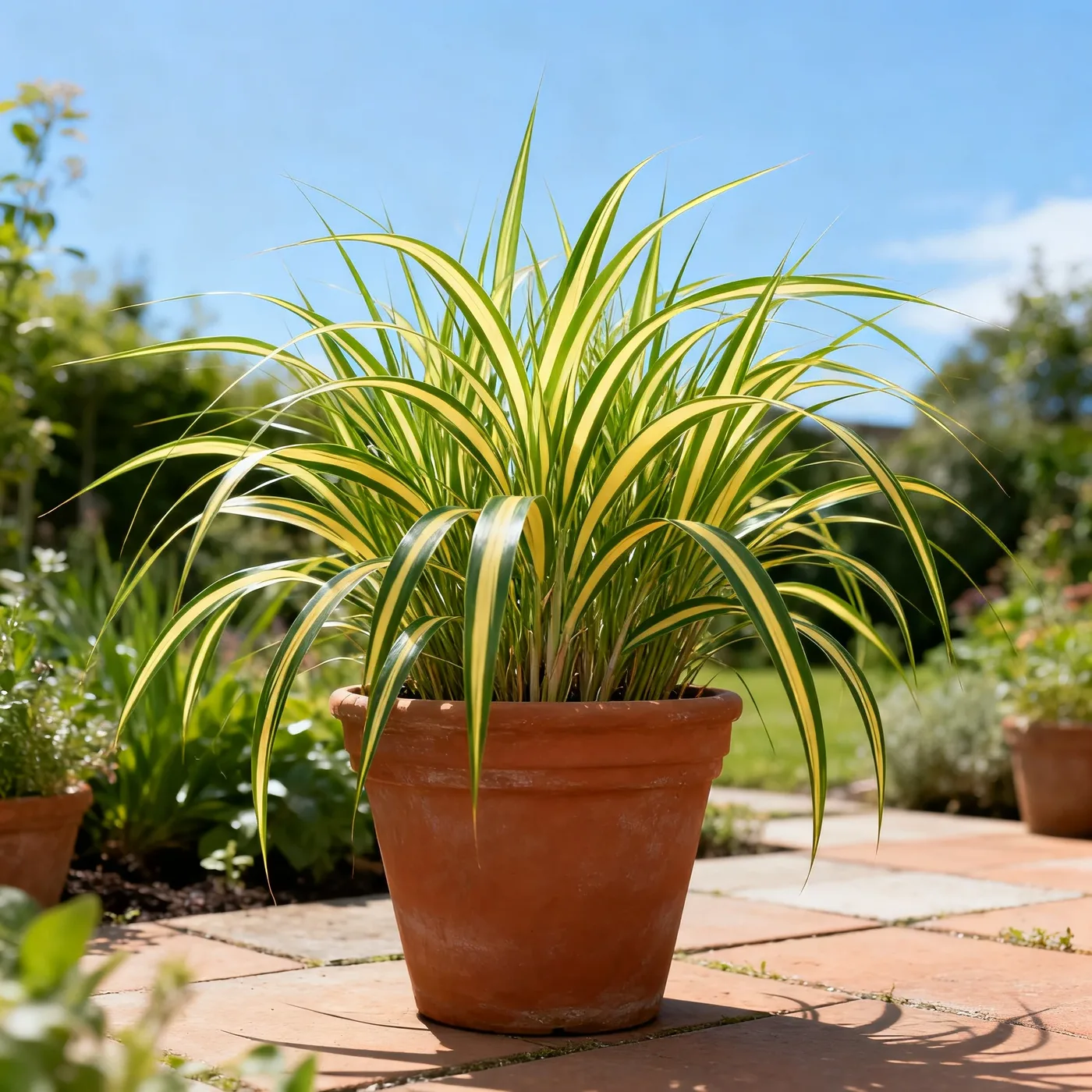
The first winter with a new ornamental grass is a shock. The green blades with their gold bands fade to the color of dry straw, the clump goes quiet, and you start to wonder whether you lost it. You didn't.
Dwarf Zebra Grass is a perennial. It returns from the same crown every spring, and the brown winter stage is part of its normal yearly cycle, not a sign of trouble. What changes from year to year is size and vigor, and that is the part worth planning for.
We'll walk you through what the word perennial means before you buy, the first weeks at home, the first twelve months, why the plant never stays green, and what a settled clump looks like by year three.
What Perennial Means Before You Buy Dwarf Zebra Grass
Perennial means the plant lives more than two growing seasons and returns from the same roots each year. An annual grass finishes its life in one season and has to be replanted. Dwarf Zebra Grass does not. It is a dwarf, compact, clump-forming deciduous perennial grass, and each of those words tells you something you can use before you order.
Clumping means it widens slowly from one center instead of running across the bed. Expect a plant 3.3 to 5 feet tall with a spread of 1.6 to 3.3 feet. That is much smaller than the species, which grows 4 to 12 feet tall, so do not plan for a giant screen.
Herbaceous means the blades and stems die back every year while the crown at the soil line stays alive. The species is an herbaceous perennial, deciduous, ornamental grass. Little Zebra follows the same pattern, so a brown clump in winter is the expected result, not a defect.
The word perennial on a plant tag says nothing about winter color. Many shoppers read it as "stays put and stays green," and those are two different promises. We tell customers that perennial is a promise about the roots, not the leaves.
Zone is the last check. NC State lists the species for zones 5a through 9b, while UF/IFAS says 4 through 9. We tell customers to plan on the narrower range for a cultivar and confirm it locally. Our zone guide goes through it.
Before you buy, settle one thing: you are getting a perennial that looks dead for part of every year.
The First Weeks With Dwarf Zebra Grass
Think of the first weeks as a short sequence, because the order matters more than speed. Your plant comes home with green, banded blades and a root mass filling the pot. Follow these steps in this order.
- Check the pot the day it comes home. Press the soil, and if it is dry, water it through. Look at the base for firm shoots and a crown that feels solid.
- Choose the spot before you dig. This cultivar wants full sun and soil that does not stay soggy. Our guide to site, timing and spacing covers the details.
- Set the crown at the same level it sat in the pot. Burying it deeper invites rot at the base.
- Water it in well, then keep the root zone evenly damp while the plant settles.
- Leave the blades alone. A new plant does not need trimming to look tidy.
Expect very little visible change at first. The roots grow out into the surrounding soil before the top does anything dramatic, and a few browned blade tips on a new transplant are ordinary. That is not dormancy.
Soil and Sun Are Forgiving
This cultivar grows in acid, alkaline or neutral pH and in chalk, clay, loam and sand soils, so you rarely need to amend the bed. What it will not forgive is a spot that holds standing water. Pick the sunniest, best-draining place you have and the first weeks become easy.
Watering While It Settles
Established plants are quite drought tolerant, but a new plant has not yet grown into the soil around it. Watering steadily now is what earns you that toughness later. A deep soak that reaches the whole root mass beats a daily sprinkle.
Month by Month Through the First Year
The first year follows one clear sequence, and the table below lays it out starting from a spring planting. Timing shifts with your climate, so read the stages as an order of events, not fixed dates.
| Stage | What you see | What you do |
|---|---|---|
| Spring | Green blades rising from the crown | Water if the soil dries out |
| Summer | A full, arching clump with gold banding | Nothing beyond watering |
| Late summer into autumn | Reddish-purple plumes | Enjoy them |
| After the first hard frost | Blades fade to straw, plumes stay up | Leave the clump standing |
| Late winter to early spring | Dry, pale clump, no green yet | Cut it down before new blades appear |
The cultivar produces reddish-purple flowers in late summer that last until autumn. Our guide to bloom timing and plume life goes deeper if you want to know when to watch for them.
The species grows at a medium rate, so a first-year plant is a modest clump, not an instant hedge. The real fullness comes in the second and third seasons. Judge the first year by whether the plant sends up green growth steadily, not by how big it gets.
If you plant in fall instead of spring, the order shifts. The plant spends its first weeks rooting in cooling soil, then goes straight into straw without a full summer on show. That is fine. The crown is still alive, and the first green you see will simply come the following spring.
The frost row is the one that worries people. Straw on the plant in that first winter means the plant followed its schedule.
Why Dwarf Zebra Grass Is Never Evergreen
Deciduous means the plant loses its foliage for the cold season instead of carrying it through. In this grass the blades do not drop. They dry in place and stand as straw until you cut them. It is a deciduous grass with no evergreen form, so a milder winter is not a reason to expect green blades in January.
It also helps to know what you are comparing it to. Plenty of evergreen grass-lookalikes keep their color through winter, and shoppers sometimes assume a tall, arching grass behaves the same way. Little Zebra does not. Its gold bands fade along with the green, so the zebra pattern disappears until spring.
The plumes are the exception to the fading. The species' pinkish or silvery 8 to 10 inch plumes persist into the winter. That means the clump is not bare in the cold months, only straw-colored, with seed heads still on top.
Plan the bed with that in mind. Pair it with plants that carry winter interest or that fill in around the clump once it is cut down, so the straw reads as a deliberate winter feature and not a gap. We find that people who plan for the brown season stop seeing it as a problem within a year.
Winter Straw and the Crown Beneath It
One of the most common questions we get each winter is whether a brown clump is dead. The straw is dead tissue, and that is the point. The living part is underground and at the soil line, where the crown holds the buds for next year's growth.
What Is Alive Under the Straw
The crown is the tight knot of stem bases and roots at the center of the clump. It stays alive through winter while everything above it dries. The straw above works as a loose blanket over it, which is one reason we do not rush to cut. Your job in winter is to leave it standing and let the crown rest.
How the Crown Regrows
As days lengthen and the soil warms, buds on the crown push up pale green shoots that turn into blades. NC State advises that foliage should be cut down in late winter or early spring, before or just as new blades begin to appear. Cut to just above the ground and the fresh growth comes through clean, with no old straw mixed in.
The timing has a practical edge. Once green tips are showing, cutting with shears risks slicing them off, and you end up with ragged blade ends all summer. Watch the base each week from late winter and cut as soon as the straw looks tired, before the tips rise.
You will sometimes hear that you should cut grasses in fall to tidy the bed. We do the opposite. Cutting early removes the cover over the crown and the winter plumes, and there is no gain. Our guide to when and how to cut back has the full routine.
An Established Dwarf Zebra Grass in Year Three
By the third year the yearly rhythm is the same, but the clump is bigger, fuller and steadier. It comes up thicker each spring, holds its form through summer, and carries more plumes. The seasons in the table above repeat without surprises. In our rows, a third-year clump is the one customers stop worrying about.
Because it is a clumper, the growth is outward from the center, not a spread across the bed. Even a mature plant stays within the 1.6 to 3.3 foot spread, which is why it suits borders and containers. You can place it once and rely on it staying put.
Dividing Every Few Years
Perennial does not mean permanent in one piece. Three- and four-year-old plants tend to flop over and might thin in the center of the clump, and dividing or cutting back encourages more upright growth. For Little Zebra we plan on dividing every 3 to 5 years. Our guide to propagating by division shows how.
No source we use gives a fixed lifespan for the plant, so we will not invent one. Dividing renews the clump, and that is what keeps it vigorous. If you want a firm number for your region, ask your local extension service.
What a True Loss Looks Like
A brown clump in winter is normal, but a few signs mean the plant has actually failed.
- The crown feels soft, mushy or hollow when you press the base after cutting, instead of firm.
- No green shoots appear at the base well after neighboring plants have leafed out.
- Cut stems show no pale or green tissue inside near the soil line.
Soggy winter ground is the usual cause, which is why drainage matters at planting. If you see none of these signs, the plant is dormant and nothing more. Give it until the neighbors in the bed are fully leafed out before you decide anything.
Dwarf Zebra Grass Returns Every Spring
The answer to the question in the title is yes. Dwarf Zebra Grass is a clumping, herbaceous, deciduous perennial. It browns every winter, it never stays green, and it needs dividing every 3 to 5 years to stay full.
So when you look out at a pale straw clump in the dead of winter, with its plumes still standing, you are looking at a plant doing what it should. The crown is alive underneath. When the days lengthen and the ground warms, it will send up green blades with fresh gold banding, right where it stood the year before.
Dwarf Zebra Grass
Nursery-grown Dwarf Zebra Grass in sizes from Quart, shipped to your door.
From $26.99
Shop Now →On our farms the Dwarf Zebra Grass sits in open, sunny ground and stands as straw through winter, so we see the same brown-to-green turn you will. Every plant we sell is grown on our own farms, top-quality grasses included, and you can browse what is in stock now.