Dwarf Zebra Grass vs Dwarf Fountain Grass: Size, Texture and Bloom
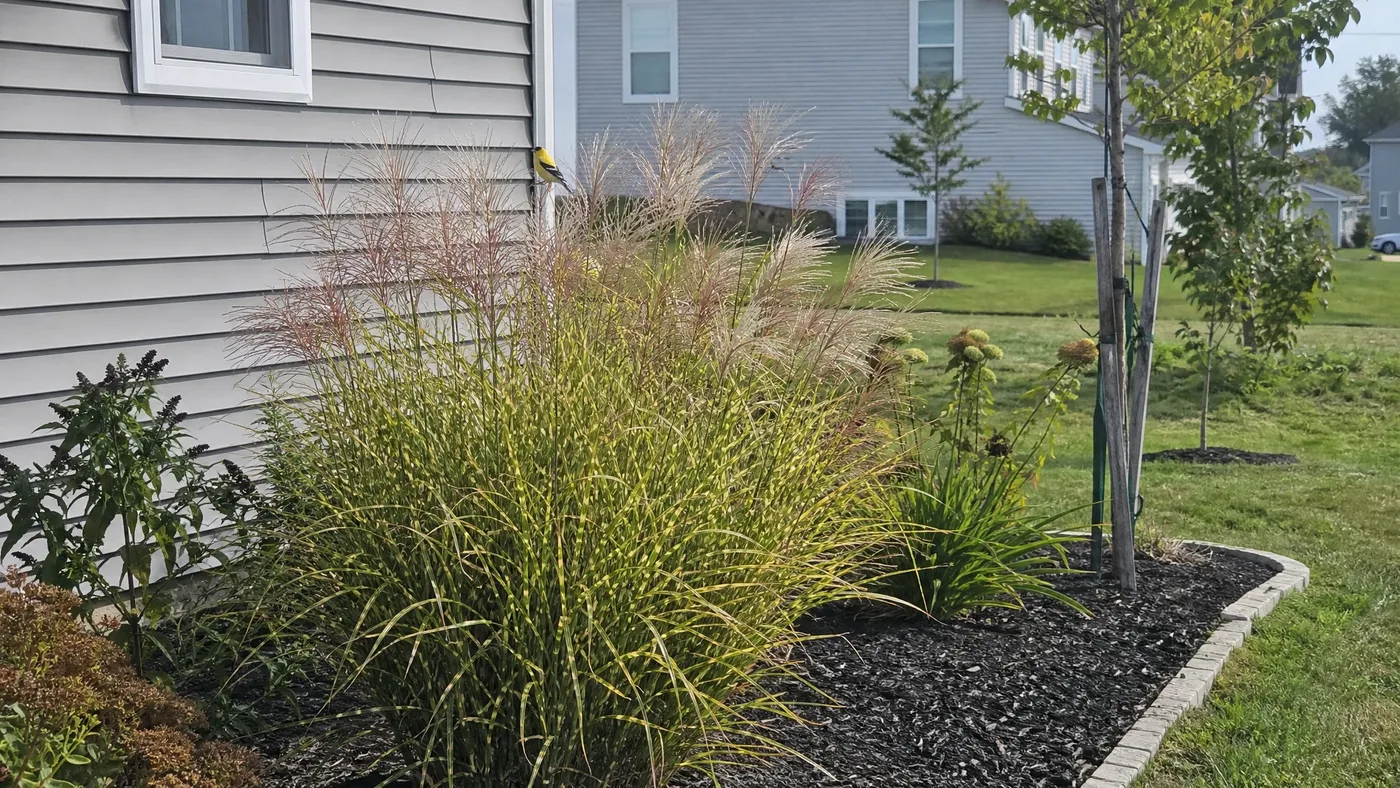
A goldfinch lands on a seedhead at dusk, sways with the stem and settles in to feed. Late summer into fall is when this question gets urgent, because that is when you can see which of the two small grasses in your bed actually gave it a perch.
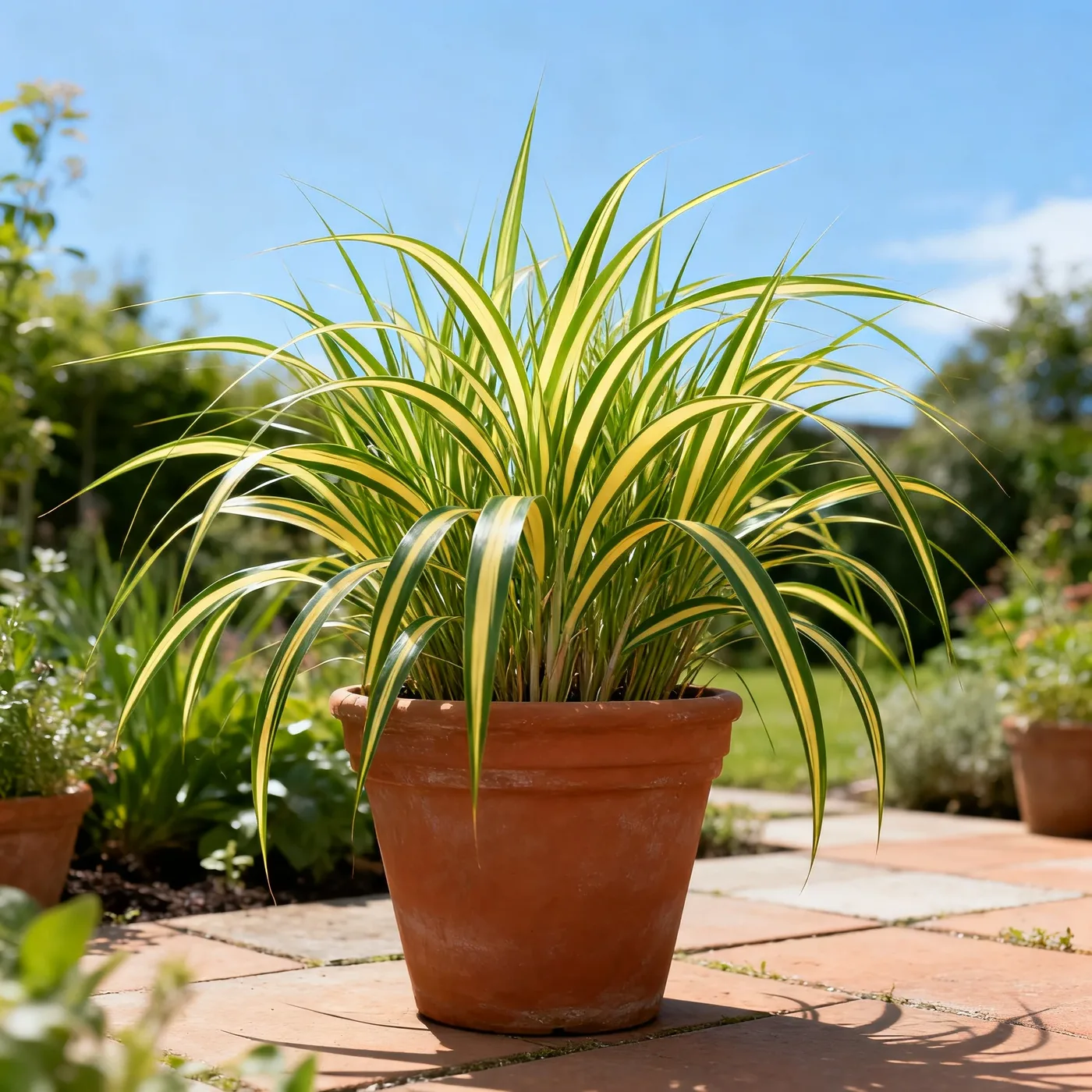
Dwarf Zebra Grass and Dwarf Fountain Grass sit side by side on garden center shelves and get sold for the same spot, yet they behave very differently once the plumes open. One stands in banded blades and carries reddish-purple plumes into fall. The other arches in solid green, throws bottlebrush spikes from mid-summer and often seeds itself around.
This guide covers everything you need to know about choosing between them, from a narrow side bed and a windy corner to a hot deck pot and a wildlife meadow edge. We name a pick for each yard, and it is not always the grass we grow.
A Narrow Side Bed Beside the Fence
Dwarf Zebra Grass grows 1–1.5 meters tall with a spread of 0.5–1 meters, which is about 3 to 5 feet tall and roughly 1.5 to 3 feet wide. For the dwarf fountain grass we use as the comparison, the Hameln cultivar, the maximum height is 0.5–1 meters, or about 20 inches to 3 feet.
On height alone, fountain grass slips under a windowsill or along a low fence more easily. Dwarf Zebra Grass gives you a taller, narrower column, and that is the better use of a strip of ground with nowhere to spread.
How Each Clump Holds Its Form
Little Zebra is a dwarf, compact, clump-forming deciduous grass, with yellow banding on dark green leaves. Those leaves arch, but in our rows the clump stands noticeably more upright than a fountain grass, which falls outward from the crown in a rounded fountain. Beside a walk, that difference decides whether you trim every summer or never touch it.
A fountain grass leans over the edge, and its flower spikes arch even farther. Dwarf Zebra Grass keeps its banded blades closer to the fence line and leaves the walkway clear.
The Shaded-Edge Problem
Fences throw shade, and this is where most side beds go wrong. Little Zebra wants full sun. The species tolerates a few hours less, since partial shade means 2 to 6 hours of direct sun, but we would not lean on that allowance for the cultivar. Customers usually ask us whether the stripes survive beside a fence, and our answer is to give it the sun first. If the banding fades anyway, our guide on why Dwarf Zebra Grass loses its stripes covers what to check.
For a narrow bed on the sunny side, we choose Dwarf Zebra Grass.
Dwarf Zebra Grass on a Windy Corner Lot
Gusts on an exposed corner test two things: whether the clump keeps its shape and where the seed goes. Dwarf Zebra Grass holds its banded blades in a stiffer clump, so the stripes stay visible even when the wind is pushing hard. A fountain grass moves more. Its arching leaves and bottlebrush plumes bow and swish, which many people find lovely, but the whole plant leans with the weather and can look windswept by the end of the season.
Stiff Blades Versus Soft Plumes
Fountain grass plumes start green, turn reddish-purple and age to golden brown, all on arching stems that flex in a breeze. The movement is the appeal. On a calm patio it is a pleasure, and on a corner lot it is constant. Dwarf Zebra Grass trades that motion for structure, and the reddish-purple flowers it opens in late summer hold above the foliage into fall.
Leave the stems standing through winter on an exposed site. They shed some wind and protect the crown, and you can cut them back before new growth starts in spring. Our notes on when and how to cut back Dwarf Zebra Grass cover the timing.
Seed on the Wind
Wind is also how fountain grass travels. NC State warns that Chinese fountain grass can spread rapidly by seeds carried by wind or by attaching to clothes or fur, and it lists Hameln as a cultivar that can self-seed aggressively. A windy corner is the worst place to plant something that drops seed freely, because the neighbors' beds get the seedlings.
Check your zone before you commit, too. Corners run colder in winter. Fountain grass grows in USDA zones 6a to 9b and the Miscanthus sinensis species in 5a to 9b, but that is the species, so ask your local extension service about the cultivar.
For the windy corner, we choose Dwarf Zebra Grass.
A Hot Deck Pot in Afternoon Glare
A pot on a hot deck is the harshest yard of the four, because the roots sit in a small volume of soil that heats up on all sides. Miscanthus is a tough plant in the ground, and UF/IFAS calls the species quite drought tolerant. A container strips away much of that margin, because a pot dries out far faster than a bed does. Our guide to drought and heat tolerance covers the in-ground side of the story.
Size Is the Deciding Factor
Dwarf Zebra Grass can reach 3 to 5 feet, and a plant that tall in a small pot topples and dries out daily. Fountain grass tops out at about 20 inches to 3 feet, so a moderate pot holds it comfortably. If you want the banded foliage on a deck anyway, give it the largest pot you can place, and read our notes on growing Dwarf Zebra Grass in containers and pots first.
Setting Up the Pot
Whichever grass you choose, the same steps keep a deck container alive through glare and cold.
- Choose a pot with drainage holes, and never let it stand in a saucer of water after rain.
- Put it where it gets full sun, which Little Zebra wants, but keep it off the hottest stretch of dark decking if you can.
- Check moisture by pushing a finger into the soil, and water when the top of the mix is dry rather than on a fixed schedule.
- Before winter, move the pot against a wall or into an unheated, sheltered spot.
That last step matters because roots in a pot take the full air temperature from every side. The zone ratings above are written for plants in the ground, so a potted grass is effectively growing in a colder zone than your map says. Ask your local extension service how much colder in your area.
For the deck pot, we choose the dwarf fountain grass, with the caveat that Dwarf Zebra Grass works if the pot is big.
Dwarf Zebra Grass Beside a Wildlife Meadow Edge
The edge of a meadow asks different questions: what feeds on the seed, what shelters in the clump, and what escapes. Bloom timing sets the first answer. Little Zebra produces reddish-purple flowers in late summer, which last until autumn. Fountain grass starts earlier, with bottlebrush spikes from mid-summer to fall, so it gives you a longer run of flowers but a plume that is changing color the whole time.
Seed, Cover and Bird Use
Both grasses stand through winter, and that is the useful part for wildlife. A clump left uncut gives cover at ground level, and the seedheads give small birds something to land on. In our rows, finches work the seedheads in fall, and they do not seem to care much about the botany. We have not found a source that rates one of these grasses above the other for bird use, so treat that as an observation and not a measurement.
The plume itself differs. Fountain grass wears its bottlebrush in a soft, arching spike that sways. Dwarf Zebra Grass holds a reddish-purple plume above banded foliage that stays upright. Our guide to when Dwarf Zebra Grass blooms and how long plumes last has the timing in more detail.
The Escape Risk
This is where the two part ways. Chinese fountain grass has escaped gardens, and Hameln can self-seed aggressively. Beside a real meadow, with wild ground just past the bed, that matters. Seedlings of a garden grass in a wild edge are hard to pull once they get going.
A common suggestion is that fountain grass is the safe, easy small grass for a naturalized border. We disagree where it borders open land, since its seeding habit is exactly the thing you do not want at a wild edge. The brief for this guide notes the problem is greater in warm zones, so cold-zone gardeners get a little slack, but not much.
For the meadow edge, we choose Dwarf Zebra Grass.
Where Dwarf Zebra Grass Earns Its Place
Put the four yards next to each other and a pattern shows. The table lays out which grass we would plant in each and the main reason.
| Yard | Our pick | Main reason |
|---|---|---|
| Narrow side bed | Dwarf Zebra Grass | Upright, banded clump stays off the walkway |
| Windy corner lot | Dwarf Zebra Grass | Stiffer form, and no free-seeding on the wind |
| Hot deck pot | Dwarf Fountain Grass | Lower height suits a moderate pot |
| Wildlife meadow edge | Dwarf Zebra Grass | Late reddish-purple plumes without the seeding risk |
When Dwarf Zebra Grass Wins
It wins wherever structure and restraint matter. The banded blades give you something to look at in July, before any plume appears, and the clump does not wander. It also tolerates a wide range of soils, since it grows in chalk, clay, loam and sand with acid, alkaline or neutral pH, which makes it easy to fit in. If you want a small grass to plant and leave alone, this is the easier one to forget about.
When the Fountain Grass Wins
Choose the fountain grass when height is your limit, when the planting is a pot, or when you want those soft bottlebrush plumes early in the season. Just deadhead the spikes before they ripen if it is anywhere near open ground. It is the right plant for the right spot, and we would rather tell you that than pretend one grass suits every yard.
Dwarf Zebra Grass Wins Three of Four Yards
The two grasses overlap on paper and diverge in the garden. Dwarf Zebra Grass brings banded, upright blades, a stiff clump and reddish-purple plumes from late summer. Dwarf Fountain Grass brings solid green arching leaves, earlier bottlebrush spikes and a habit of seeding itself that you have to manage. Choose by the yard, not by the shelf.
The tally from the four yards: narrow side bed, Dwarf Zebra Grass. Windy corner lot, Dwarf Zebra Grass. Hot deck pot, Dwarf Fountain Grass. Wildlife meadow edge, Dwarf Zebra Grass.
Dwarf Zebra Grass
Nursery-grown Dwarf Zebra Grass in sizes from Quart, shipped to your door.
From $26.99
Shop Now →We grow our Dwarf Zebra Grass outdoors in full sun on our own farms, the light it wants. Customers come back to us for clumps that keep their stripes and stand upright, and we grow and sell top-quality grasses from those same farms. If this guide settled your yard, start with one of our Dwarf Zebra Grass plants.