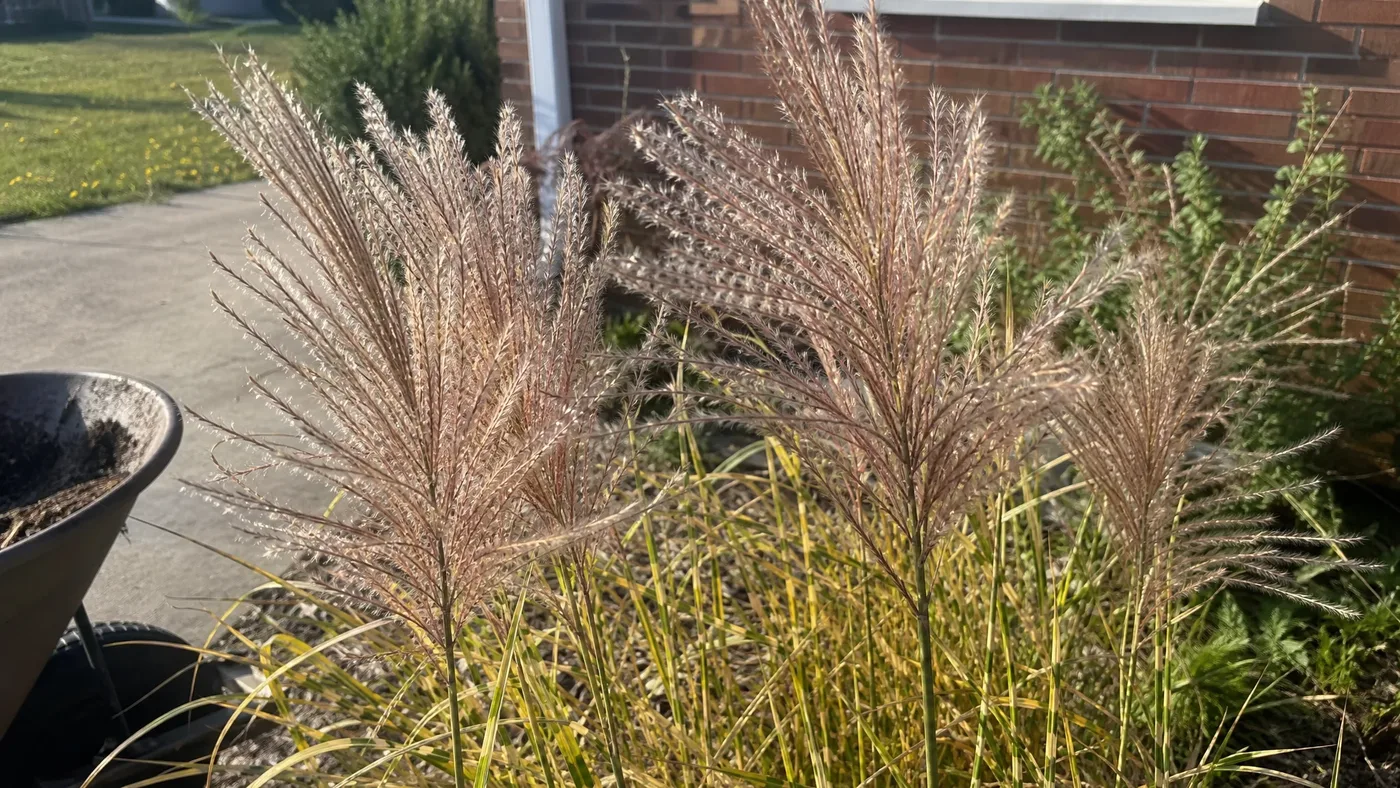
Dwarf Zebra Grass Names: Eulalia and Maiden Grass
Six names can show up on tags and listings for one grass: Little Zebra, dwarf zebra grass, eulalia, Japanese silver grass, dwarf maiden grass and, on German sites, Chinaschilf. Can they really describe the same plant? Mostly yes, and the gaps between them are where buyers get tripped up.
Six is the number that matters because each name sends a search to a different set of listings. Someone typing "little zebra eulalia grass" and someone typing "dwarf maiden grass" can land on pages that look unrelated while both describe the same cultivar, Miscanthus sinensis 'Little Zebra'. Pick the wrong match and you may get a much taller grass than the compact one you planned for.
This article talks about the names of this grass and answers the questions customers ask us most. Read on to learn where zebra grass came from, what each common label means, how Little Zebra relates to Zebrinus, and how to check any tag before you buy.
Where the Name Zebra Grass Began
Zebra grass is a nickname that came from the leaves, not from a botanist. Most Miscanthus sinensis plants carry plain green blades. Banded forms turned up and were kept, and because growers propagate them by division, every piece of the clump carries the same pattern. People looked at the striped blades and said the obvious thing.
The Banded Form Took the Name First
The best-known banded cultivar is Zebrinus. Its leaves are marked with golden to pale yellow stripes on an upright clump that reaches around 6½ feet. So when "zebra grass" first appeared on tags, it meant a tall plant, a screen or a back-of-the-border grass.
That detail matters today. If a listing says "zebra grass" and nothing else, you cannot tell whether the plant stays under your windowsill or towers over it.
Why Dwarf Got Added
"Dwarf" is the fix. Once a compact banded grass reached nurseries, sellers needed a way to say "same striped look, much smaller." Adding "dwarf" to the older name was the quickest route, and Little Zebra became dwarf zebra grass. It is a trade label, not a botanical one, which is why you will not find "dwarf" in the Latin name.
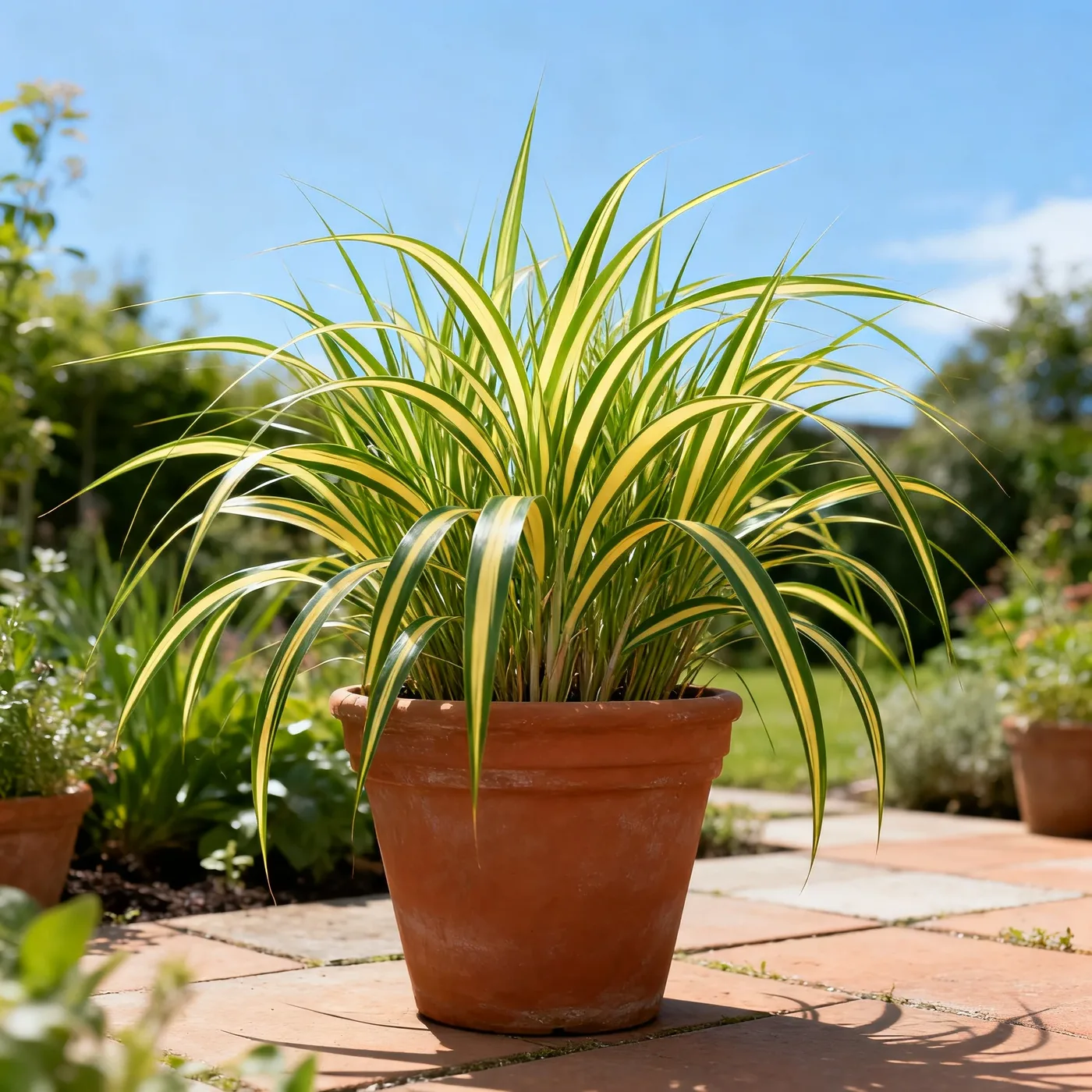
Its leaves are dark green with yellow banding, and the reddish-purple flowers open in late summer and last into autumn. Those two traits are the plant's real signature, and we will come back to them when we read tags.
Eulalia, Silver Grass and Maiden Grass Defined
Each of these labels is a common name, meaning a habit of speech and not a rule. Taking them one at a time shows what each really points to.
- Eulalia. This is a common name for Little Zebra, written as "eulalia 'Little Zebra'". It is also used for the species as a whole, so on its own it names a plant group, not this cultivar.
- Japanese silver grass. This is the species-level name. Miscanthus sinensis is filed under it, and it also goes by Chinese silver grass and the Japanese name susuki.
- Maiden grass. Another species-level label that gets stretched across many cultivars, from tall to compact. Treat it as a family name, not a description of any one plant.
- Dwarf maiden grass. Sellers add "dwarf" to maiden grass for the same reason they add it to zebra grass. It still names no cultivar.
- Dwarf Japanese silver grass. This is Japanese silver grass with a size hint added, and it works the same way.
The pattern is plain once you see it. NC State's common-name page lists Dwarf Maiden Grass, Eulalia, Maiden Grass and Chinese Silvergrass as alternate names for the species itself. Every one of them is shared by many plants, and none is reserved for Little Zebra.
One of the most common questions we get is whether eulalia and Little Zebra are the same plant. They are in the sense that Little Zebra is one eulalia. They are not in the sense that any eulalia is a Little Zebra.
Dwarf Zebra Grass Is a Cultivar, Not a Species
A cultivar is a cultivated variety: one selected plant, kept identical by division, with its own name written in single quotes after the Latin name. Think of the species as a family surname and the cultivar as one person in that family. "Smith" tells you very little. "Dana Smith, born in March" tells you exactly who you mean. Miscanthus sinensis is the surname, and 'Little Zebra' is the person.
What Changes Between Species and Cultivar
Size is the clearest difference. Little Zebra reaches a height of about 3.3 to 5 feet with a spread of roughly 1.6 to 3.3 feet. The species is far larger: NC State gives 4 to 12 feet tall by 4 to 6 feet wide, and UF/IFAS lists a spread of 5 to 10 feet.
Little Zebra is a dwarf, compact, clump-forming deciduous grass. Our guide to size and growth rate covers what that means in a bed.
Why the Distinction Pays Off
Advice written for the species can mislead you about the cultivar. A planting plan built on a 4 to 12 foot grass will leave gaps around a plant that tops out near 5 feet. The species tolerates partial shade, but we recommend full sun for Little Zebra.
The cultivar name also carries a PBR mark, which stands for plant breeders' rights. That tells you Little Zebra is a protected, named selection, not a generic seedling.
How Dwarf Zebra Grass Relates to Zebrinus
This is the question we hear after the eulalia one: is Little Zebra just a small Zebrinus? The honest answer is that the sources we rely on do not give a parentage, so we do not claim one. What they do show is that the two are separate banded cultivars of the same species, built on the same idea at different scales.
The table below sets the two cultivars side by side.
| Trait | Little Zebra | Zebrinus |
|---|---|---|
| Height | About 3.3–5 ft | Around 6½ ft |
| Leaves | Yellow banding on arching, dark green blades | Green blades with golden to pale yellow stripes |
| Habit | Dwarf, compact clump | Upright clump |
Think of it as cousins, not parent and child. They share the banding that earned the name zebra grass, but a clump of Zebrinus will outgrow a clump of Little Zebra by a wide margin.
The Strictus Mix-Up
Some sellers list Little Zebra as Strictus. Strictus is a different cultivar, so a Strictus label on a compact banded grass is loose labeling, not a second name for the same plant. We often see this on resale listings where the text was copied from another banded grass. Our guide to dwarf zebra grass versus porcupine grass walks through that confusion in detail.
Chinaschilf and Other Names Abroad
Chinaschilf is the German common name for Miscanthus sinensis. Schilf means reed, so the word reads roughly as "China reed." Like eulalia, it names the species, not Little Zebra. A German nursery that sells the cultivar normally writes the Latin name and 'Little Zebra' next to it.
Why Labels Change Across Borders
Common names grow up inside a language and a gardening culture. British gardeners use eulalia. In the US, the names include maiden grass, Chinese silver grass and several others. Japanese gardeners say susuki. No body governs these names, so each country keeps the ones that stuck.
Units drift too. A UK listing gives meters where a US tag gives feet, and a copied description can carry either one into the wrong market.
What to Do With a Foreign Label
Ignore the common name and read the Latin. If a German or imported listing says Chinaschilf and gives 'Little Zebra' in quotes, you have the right plant. If it says Chinaschilf alone, you have the species or an unnamed form, and the height may run to many feet.
Reading Dwarf Zebra Grass Labels at the Nursery
A tag is a short document, and each part tells you something different. The table shows how we read the most common wordings.
| What the tag says | What it tells you |
|---|---|
| Miscanthus sinensis 'Little Zebra' | The cultivar name in single quotes. This is the plant. |
| Dwarf zebra grass, eulalia or dwarf maiden grass alone | A common name that fits several plants. Look for the Latin name. |
| Miscanthus sinensis with no cultivar | The species, which runs 4 to 12 feet. |
| Strictus on a dwarf banded grass | A mismatch. Ask the seller to confirm. |
| PBR after the name | A plant breeders' rights note. |
Check the Plant Against the Tag
Labels fail, plants do not. Look at the leaves first: dark green blades with yellow banding that arch outward. Then check the expected height, about 3.3 to 5 feet at maturity, not the 6½ feet of a Zebrinus-type grass. If the plant is in bloom, the plumes should be reddish-purple, and our guide to bloom timing shows when to expect them.
In our rows, mislabeled pots almost always give themselves away by the bands. Wrong plants either have no banding at all or have stripes that run far taller than the clump should.
Shopping for Dwarf Zebra Grass by Latin Name
Searching by Latin name beats searching by nickname because the Latin name is the only part of the label that is standardized. Here is the routine we suggest, in the order we would run it.
- Find the genus and species, Miscanthus sinensis. If you do not see it, the listing is not specific enough to trust.
- Look for 'Little Zebra' in single quotes straight after it. Common names in the headline do not count.
- Check the mature height. About 3.3 to 5 feet fits. A listing that promises much more is describing another plant.
- Compare the photo with the description: dark green leaves, yellow banding, reddish-purple flowers in late summer.
- If the seller writes Strictus, or only "zebra grass," ask for the cultivar name in writing before you order.
- Confirm that Miscanthus sinensis is allowed where you live. The species is invasive in North Carolina, so check with your local extension service.
Once the name is confirmed, our buying guide on pot sizes helps you judge the plant itself, and the zone guide helps you judge whether it suits your garden.
Many Names, One Dwarf Zebra Grass
Dwarf zebra grass, eulalia, Japanese silver grass, dwarf maiden grass and Chinaschilf are common names, and most of them belong to the whole species. Only the cultivar name, 'Little Zebra', points to the compact, banded grass that stays around 3.3 to 5 feet. Zebrinus is a taller cousin, and Strictus is a different cultivar altogether.
The one-line check for any label: does it read Miscanthus sinensis 'Little Zebra' in that order? If it does not, ask before you buy.
Dwarf Zebra Grass
Nursery-grown Dwarf Zebra Grass in sizes from Quart, shipped to your door.
From $26.99
Shop Now →Our Dwarf Zebra Grass spends its life in full sun on our farms, in moderately fertile soil that drains freely, so the clumps stay compact and the gold bands stay sharp. We only ship plants we would plant ourselves, and that includes top-quality grasses like this one. If sorting out Eulalia and Maiden Grass has you ready to choose, see the plants we have ready.