Dwarf Zebra Grass PBR Explained: Plant Patent and Dividing Rules
A gardener squints at the tiny "PBR / PP 13,008" print on a Little Zebra tag and admits it looked like a legal warning. That is a fair first reaction, since a tag with capital letters and a number usually means "read this before you do something." We would rather check the suspicion than trust it.
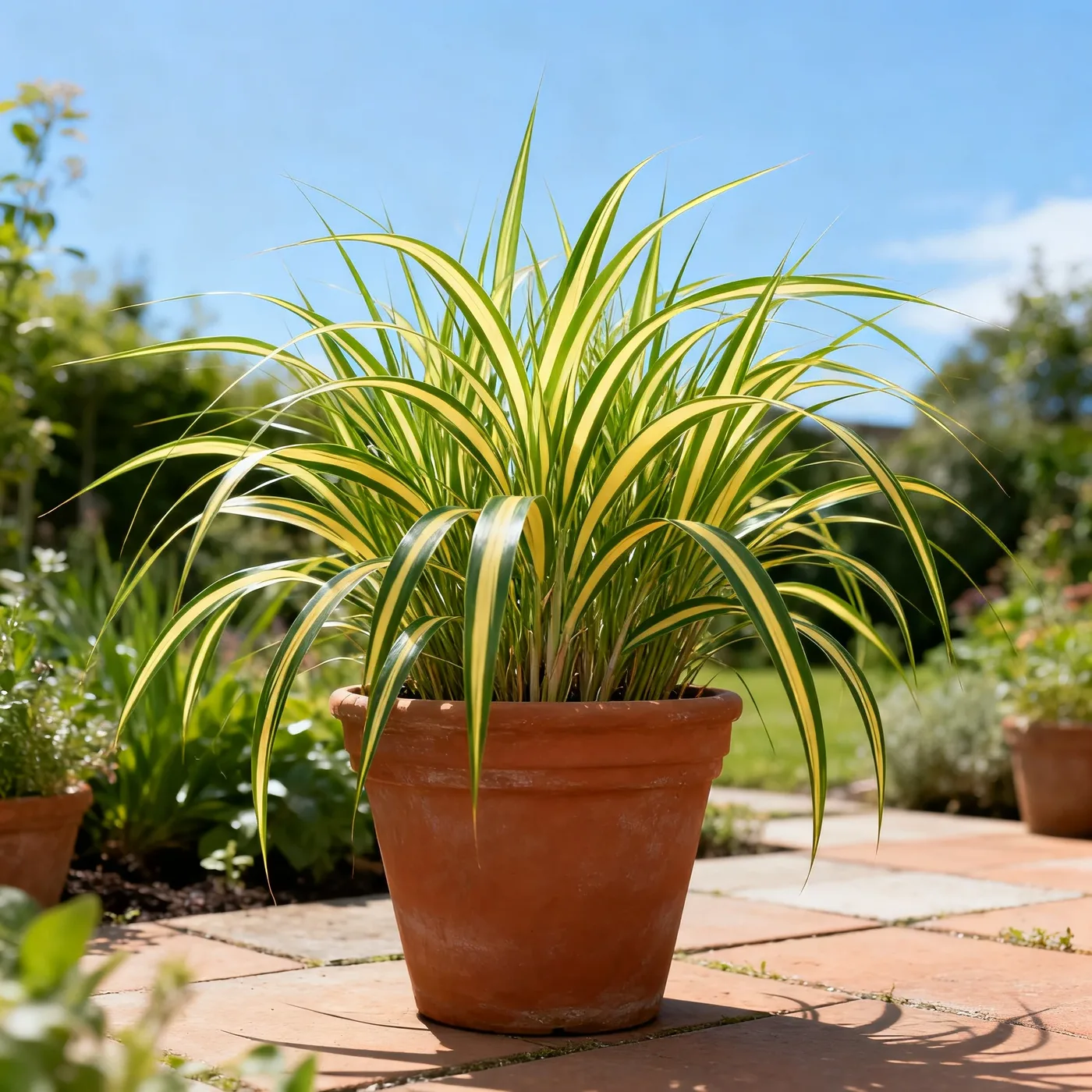
Little Zebra, botanically Miscanthus sinensis 'Little Zebra', is a bred cultivar, not a wild form of the species, and the mark on the tag is the paper trail of that breeding. Below, you'll find out all about what that mark means, including what dividing a clump does legally, where sharing and selling cross a line, why seedlings are a different plant, and how to check whether the patent still runs.
Is a PBR Tag a Warning Label?
No. The mark records ownership, and it warns you of nothing.
When you buy a plant, you may plant it, water it and enjoy it. Nothing printed on the tag changes that. What the mark does is tell the world that someone holds a claim over making copies of this particular plant.
What PP, USPP and PPAF Mean
In the United States, plant patents show up on tags as PP, USPP or PPAF. PPAF means patent applied for, and the safe advice is to treat a PPAF plant as protected until its status is clear. "PP 13,008" is the number of a plant patent, which you can look up. It is a filing reference, the way a parcel number is for a lot.
What PBR Adds
PBR stands for plant breeders' rights, a separate system from the US plant patent. European tags carry those letters, and you may see both marks side by side.
We do not quote a PBR term here, because the sources we trust give none. Your national plant variety office or your local extension service can tell you how it works where you live.
Read together, the two marks say the same thing. Someone owns the right to copy this plant, and you are the buyer, not the copier.
Dividing Your Dwarf Zebra Grass Is Not a Loophole
What the Law Says About Your Own Beds
The belief goes like this: you bought it, so you can split it. Most of us would like that to be true. The rule says otherwise in plain words: if a plant is under patent, you cannot legally propagate it by division, cuttings or other vegetative methods without permission from the patent holder.
The USPTO frames the grant the same way, as the owner's right to exclude others from asexually reproducing the plant. Division is asexual reproduction, and neither source carves out an exception for a backyard.
So we do not tell customers that home division is automatically fine, because the sources do not say so. What we tell customers is that the real question is whether the patent is still running. We cover that check further down. If the patent has expired, divide as you like.
Why You Will Want to Divide Anyway
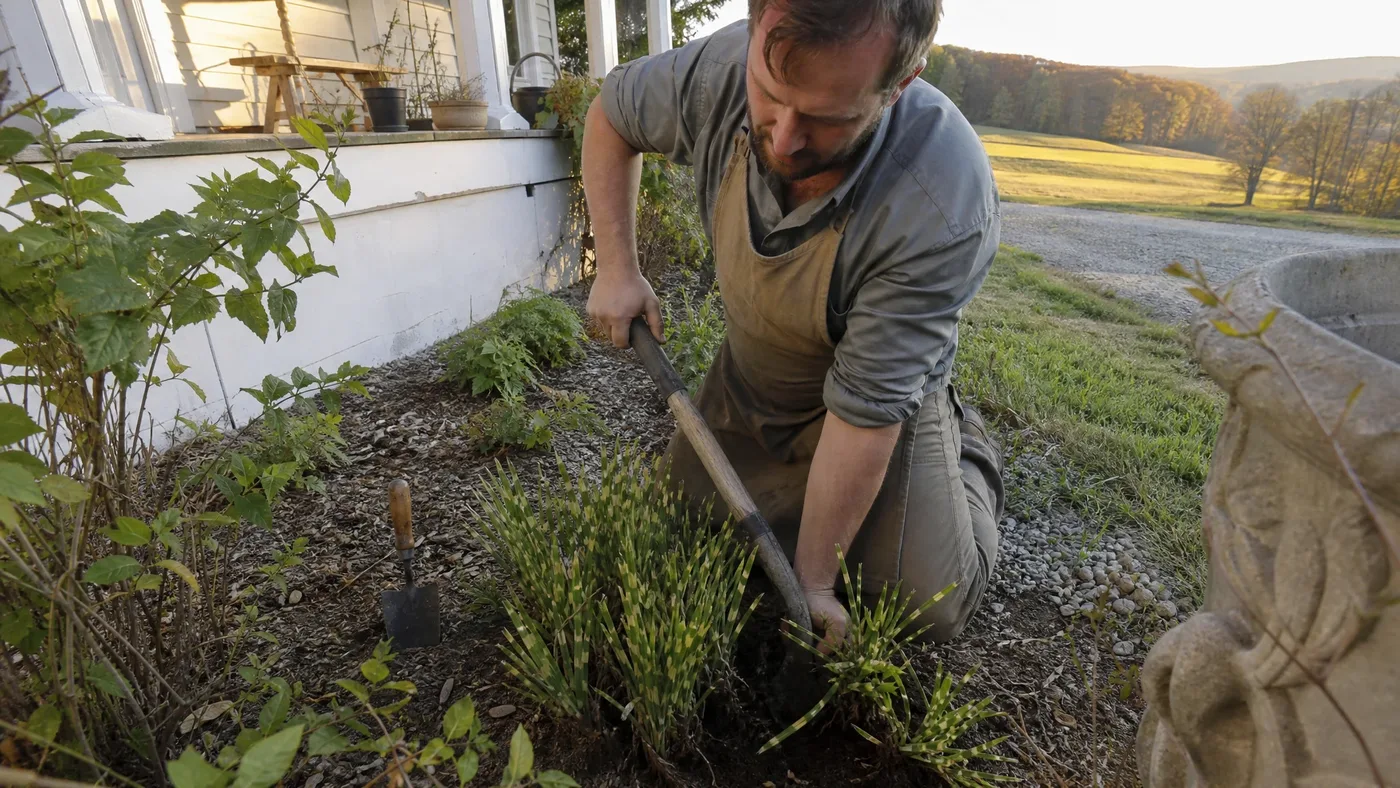
Dwarf Zebra Grass is a compact, clump-forming deciduous grass, and clumps get crowded. Colorado State's extension notes that ornamental grasses often die out in the center without regular division, and that plants turning into donuts are ready to be split. That is a maintenance reason, and it is a good one.
When division is open to you, because the patent has lapsed or you have permission, perennials are commonly divided in early spring or early fall, when temperatures are moderate. Our guide to dividing Dwarf Zebra Grass covers technique only, so use it for the how and this guide for the whether.
Dwarf Zebra Grass Under Plant Patent 13,008
Some gardeners assume a patent number on a plant tag only protects the name, like a logo. We think that is backward. A name is one thing and a patent on the plant itself is another, and the two are treated as separate subjects for exactly that reason.
Names Versus Plants
The USPTO says a plant patent protects the owner's right to exclude others from asexually reproducing the plant. The object of that right is the plant. Every clump that is a vegetative copy of the original, whether made by division, cuttings or another cloning method, is a copy of the patented thing. By that logic, relabeling a division with a different name would not make it a different plant.
We often see tags where the patent line is the smallest print on the card, and people skip it for that reason. Size of type has nothing to do with legal weight.
What the Patent Is Built Around
The plant at issue is a dwarf, compact, clump-forming deciduous perennial grass. It grows about 3.3–5 feet tall with a 1.6–3.3 foot spread, far smaller than the species.
A plant patent covers one distinct plant, and for Little Zebra that distinct plant is a compact grower with banded leaves. That is also the reason seed-grown plants sit so differently, which the section after next explains.
Selling Divisions Is a Different Matter
The belief here is that sharing is harmless, and selling is just sharing with a price. Many gardeners are surprised to learn that sharing divisions of patented perennials at a garden club plant sale or swap is technically prohibited during the patent period. So money is not the trigger. The copy is.
That puts several familiar habits on the wrong side of the line while a patent runs:
- Dividing a clump and selling the pieces at a plant sale is propagation for sale, the clearest case there is.
- Handing divisions to a neighbor or swapping them at a garden club is still technically prohibited, even with no money changing hands.
- Growing divisions on in bulk to sell as pots is commercial propagation, and it needs the patent holder's permission.
"It's only a few pots for the club sale" is advice we hear often, and we do not follow it for a patented plant. A small scale does not change what the act is.
If you want more clumps for a border, buying tagged plants is the straightforward route, and we grow Dwarf Zebra Grass in our own rows for exactly that. Our buying guide shows what to look for in a pot.
Seed-Grown Dwarf Zebra Grass Is Not the Same Plant
Here the belief is that a seedling from a Little Zebra clump is simply another Little Zebra. It is not, and the reason also explains why seed sits in a different legal place. In many cases using a patented plant in sexual reproduction is not prohibited, because seedlings are not identical clones of the patented plant.
What Seedlings Lose
Seed mixes the genes of two parents, so what grows is a new plant, not a copy of one. The traits that make Little Zebra worth buying are the first to go, namely the banding and the compact size.
The cultivar is 1–1.5 meters tall, about 3.3–5 feet. NC State lists the species at 4–12 feet tall and 4–6 feet wide. A seedling can land anywhere in that wide range, and often leans toward the big species rather than the dwarf.
Customers usually ask us whether volunteer seedlings are free Little Zebra. They are free grass, and that is all we can promise. If your own clump's bands have faded, that is a light problem, not a seed problem, and our guide on why Dwarf Zebra Grass loses its stripes covers it.
Why Seed Is Not a Workaround
The skeptic's catch is plain. The only way to get a true copy is a vegetative one, and vegetative copying is exactly what the patent controls. Seed escapes the patent because it does not produce the cultivar.
You cannot have both a true Little Zebra and a free pass from the patent, and a seedling gives you neither the true plant nor a plant that matches the tag.
Does a Patent Number Mean Still Protected?
Not necessarily. A number on a tag says a patent was granted at some point, and it says nothing about today. Tags get printed in bulk and reused for years, and the number stays on them long after the legal situation changes.
A US plant patent lasts 20 years from the date of filing, and it cannot be renewed. The clock starts at filing, not when the patent was issued, so the issue date on a document can mislead you.
After expiry, anyone may propagate the cultivar. Plant patent numbers keep climbing, and 13,008 is far from the newest, so this check is worth doing rather than assuming either way.
How to Check a Tag
Here is the sequence we would follow:
- Copy the number from the tag, here PP 13,008.
- Look the patent up by number on the USPTO's patent search.
- Find the filing date, not the issue date.
- Add 20 years. If that date has passed, the US patent has expired for good.
- Check PBR separately with your national plant variety office or extension service, since an expired US patent says nothing about it.
If a tag says PPAF or patent pending instead of a number, treat the plant as protected and skip propagation until its status is clear.
What Dwarf Zebra Grass Owners Can Safely Believe
Here is each belief from above with its verdict, so you can see where the evidence landed.
| Belief | Verdict | What it rests on |
|---|---|---|
| The tag is a warning to buyers | False | It records a claim over copying, not limits on growing |
| Dividing for your own beds is fine | Not while the patent runs | USPTO draws no home-garden exception |
| The patent only protects the name | False | It protects the plant against asexual reproduction |
| Sharing or selling divisions is harmless | False | Swaps and plant sales are technically prohibited during the term |
| Seedlings are Little Zebra | False | Seedlings are not identical clones and lose banding and compact size |
| A patent number means current protection | Unproven | The term is 20 years from filing and cannot be renewed |
Everything else about owning the plant is unrestricted. The tag limits copying, not caring, so plant it and leave it alone. It suits full sun and chalk, clay, loam or sand soils, in any pH from acid to alkaline. Our guide on how big Dwarf Zebra Grass gets covers what you will see year to year.
Your Dwarf Zebra Grass Clump, Settled
The mark on the tag is a record of a claim over copying, the patent covers the plant and not just its name, and seed is no route to a true copy. The one thing the tag cannot tell you is whether the patent still runs, and the filing date will.
A home gardener may grow, move and enjoy a Little Zebra clump and may divide it freely once the patent has expired, but while the patent runs, dividing it and passing on the pieces needs the holder's permission.
Dwarf Zebra Grass
Nursery-grown Dwarf Zebra Grass in sizes from Quart, shipped to your door.
From $26.99
Shop Now →We grow Dwarf Zebra Grass in full sun on our own farms, and before a plant leaves us we check that it is the compact, banded Little Zebra on the tag. We are a small business that grows its own stock, so if you want a clump you can trust, browse what is in stock now.