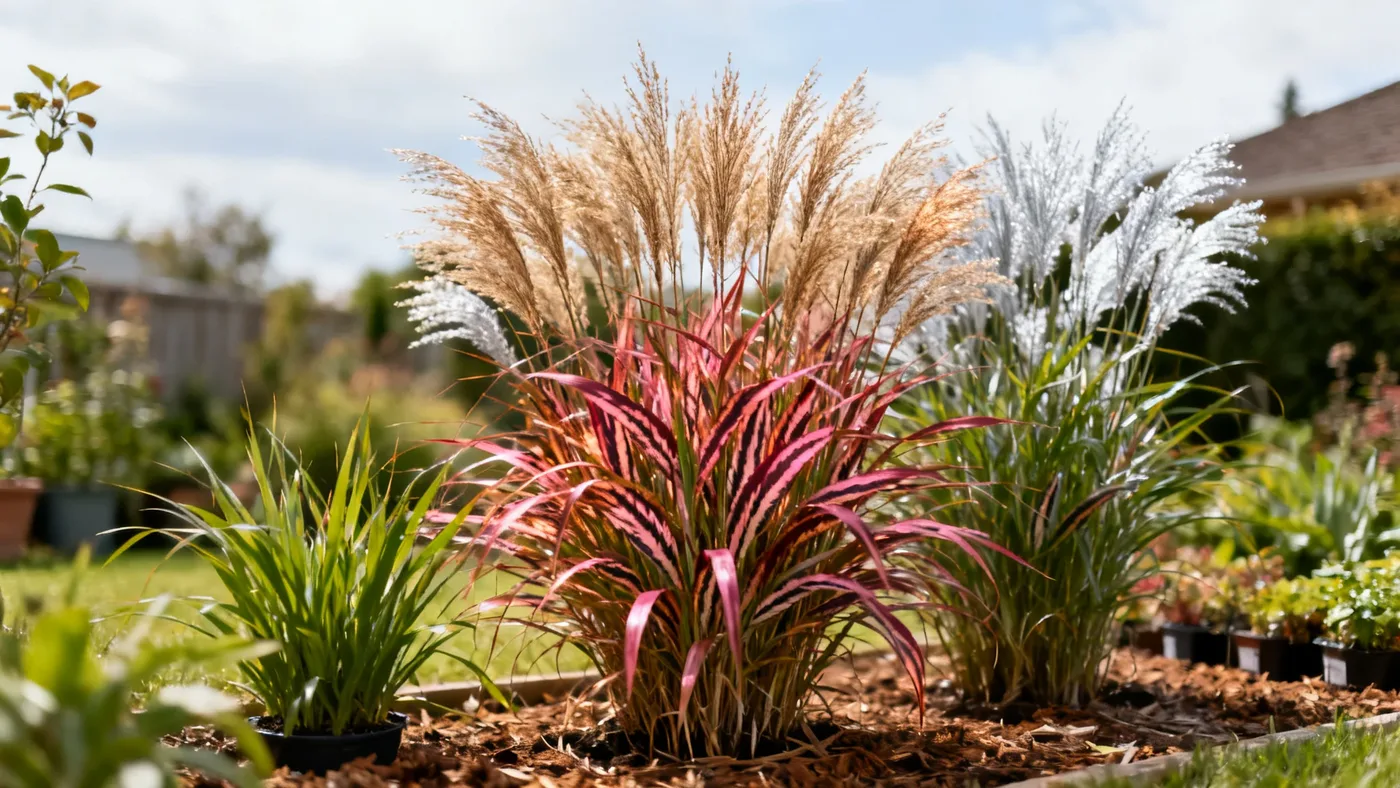
Dwarf Zebra Grass Fall Color: What to Expect in Autumn
Late summer fades into fall, and your Dwarf Zebra Grass transforms. The green arching blades that graced your garden through July and August shift into warm, earthy tones. The flower plumes that emerged earlier now mature into silvery accents that catch the afternoon sun. If you've planted Miscanthus sinensis 'Little Zebra' in zones 4 through 9, this seasonal shift is one of the most reliable displays your garden will offer. Understanding what to expect and how to prepare now means you'll get the most from your grass throughout autumn and into winter.
The Color Transformation: Timeline and Tones
Dwarf Zebra Grass doesn't change color all at once. Instead, it transitions gradually as temperatures cool. In most regions, the foliage begins shifting in mid to late September, though exact timing depends on your climate zone. By mid-October, the shift is typically complete.
Expect your dwarf zebra grass fall color to move through three distinct stages:
- Early fall (August-September): Green foliage persists while coppery-pink to reddish flower plumes emerge and continue lengthening.
- Mid-fall (September-October): Foliage begins shifting to gold and tan tones. Plumes deepen, then begin maturing toward silvery-tan and white.
- Late fall (October onward): Foliage settles into rich tan, gold, and bronze tones. Plumes are now predominantly silvery-white, creating striking contrast against the darker foliage below.
This isn't a sudden change. Instead, warm and cool days trade back and forth, and your grass responds with increasingly prominent warm tones. That gradual shift is part of the appeal. For weeks, your 3 to 4 feet of foliage and 4 to 5 feet of plumes deliver sustained visual interest.
Flower Plume Color and Winter Appeal
One of the strongest features of dwarf zebra grass in autumn is the maturation of the flower plumes. These plumes emerge in late summer as coppery-pink to reddish accents atop your clump. By early fall, they shift toward tan. By mid-autumn, they become silvery-white and remain that way through winter.
This persistent plume color is why Dwarf Zebra Grass delivers such strong winter interest. Once your foliage has settled into its bronze and tan tones, the silvery plumes stand out vividly, especially against bare ground or early-season snow. Many gardeners in zones 4 through 9 leave their dwarf zebra grass standing all winter specifically for this effect. The dried plumes catch frost and ice, and they move gracefully in winter wind.
Caring for Your Dwarf Zebra Grass During Fall
Fall is not a time for active management. Your grass is responding to seasonal cues and needs very little from you. Here's what matters:
Watering
As temperatures drop and day length shortens, your Dwarf Zebra Grass naturally requires less water. If your region receives regular fall rainfall, you may not need to water at all. If your area is drier than usual, water moderately when the top inch or two of soil dries out. Once established, this grass is drought tolerant and can handle the transition into dormancy without supplemental irrigation. Simply avoid letting soil completely dry out if you're in the middle of a dry spell.
Fertilizing
Do not fertilize in fall. Your grass is naturally preparing for dormancy. Fertilizing now can stimulate tender new growth that frost will damage. Spring is the right time for a balanced, moderate fertilizer application if your grass seems to need it. Dwarf Zebra Grass is a light feeder, so even then, fertilizing is optional.
Pruning in Fall
Leave your dwarf zebra grass alone now. Resist the urge to cut it back or tidy it up. The foliage and plumes protect the crown of the plant and provide winter interest through the coldest months. Pruning happens in late winter or very early spring, before new growth emerges. At that point, cut all foliage back to 4 to 6 inches above the ground. Fall pruning wastes the plant's natural beauty and can expose the crown to winter damage.
Companion Plants and Fall Garden Design
Dwarf Zebra Grass pairs beautifully with fall-blooming perennials. The tan and bronze fall foliage provides a warm backdrop for coneflowers (Echinacea) and black-eyed Susans (Rudbeckia) that bloom into autumn. Russian sage (Perovskia) also works well, as its airy structure complements the grass's arching habit. Sedums and ornamental sedges like Carex add textural variety without competing for attention.
In a fall garden, position your dwarf zebra grass where afternoon or low autumn light can backlight the foliage and plumes. That's when the silvery tones truly glow. A clump planted near a path or seating area becomes a focal point as the season progresses.
Expecting Variation by Zone
If you're in zones 4 or 5, your fall color show typically arrives earlier than in zones 8 or 9. A hard frost in early October might accelerate the color shift and prompt the grass to finish its seasonal cycle faster. Gardeners in warmer zones may see the transition happen more gradually, sometimes not fully completing until November.
Regardless of your zone, the progression is the same: coppery plumes mature to silver, foliage shifts from green through gold to tan and bronze. The timing just moves earlier or later based on your climate.
Winter Interest and Spring Renewal
One reason Dwarf Zebra Grass earns space in so many gardens is its winter strength. The dried foliage and silvery plumes persist from fall through winter and into early spring. Snow and ice don't destroy them. Wind may bend them, but they bounce back. This persistent form gives your garden structure and visual interest during months when many other plants have vanished.
That durability ends when you prune. In late winter or very early spring, before new growth emerges, cut the entire clump back to 4 to 6 inches above ground level. This removal seems drastic, but it's essential. New shoots emerge from the base of the plant, and removing the old foliage lets them grow unobstructed. Within weeks of pruning, your dwarf zebra grass will green up again and begin its cycle anew.
For a comprehensive guide to year-round care, including fall preparation and spring renewal, see the complete Dwarf Zebra Grass care guide for every season.
Quick Reference: Dwarf Zebra Grass in Fall
| Aspect | What to Expect |
|---|---|
| Foliage Color Shift | Green to gold, tan, and bronze (August-October) |
| Flower Plume Color | Coppery-pink/reddish to silvery-white |
| Mature Height (foliage) | 3 to 4 feet |
| Total Height (with plumes) | 4 to 5 feet |
| Watering | Reduce; rely on rainfall once established |
| Fertilizing | None; wait until spring |
| Pruning | Not in fall; cut back in late winter to 4-6 inches |
| Winter Interest | Strong; leave standing through winter |
| Hardiness (USDA Zones) | 4-9 |